
8 July 2026
Silvana Tirinzoni looks back on her legendary curling career after retirement
A wry smile cracks across Silvana Tirinzoni’s face as she joins the call for what could be her final World Curling interview.
Six months earlier, she left the question of retirement unanswered on our previous call, neither confirming nor denying her future. After all, the end of an Olympic cycle has traditionally been the most popular time to hang up the broom.
Then, accompanied by her vice-skip Alina Paetz, she looked stoic and laser-focused in an interview weeks before the Milano Cortina 2026 Olympic Winter Games. In contrast, she looks so relaxed you’d be forgiven for thinking she has just treated herself to a spa weekend.
Instead, she calls from Canada, where she is spending time with her partner before holidaying in Panama and Costa Rica. It will be the first summer in decades where one eye is not on the autumn.
“I knew probably two years ago that this is going to be my last season,” said Tirinzoni.
“I was pretty sure I’m going to quit after that, but I wanted to make it easy for myself too, and I found if I would announce it before the season or in the middle of the season, it would just make everything harder for me.
“I would go to Bern and then say, ‘OK, that was my last time in Bern’, and then I would go to Canada and say, ‘My last time in Canada, my last Slam’. Every interview I gave, it’s probably about my retirement and I didn’t want to do that. So I left it open also for myself a little bit.”

A difficult decision to walk away
Paetz, Carole Howald and Selina Witschonke were informed of the decision shortly before it was announced in April, after the rink missed out to Team Schwaller for a place at the 2026 World Women’s Curling Championship.
“For me, it was like a little bit like jumping off a cliff into the cold water: it’s very hard to do that one step, but once you have done it, you feel actually OK,” she said.
“I feel OK with this decision. I absolutely know it was the right timing, but it is a very hard decision. It’s also a little bit like a divorce. You lose a lot, you don’t just go to practice and don’t play tournaments anymore. You lose the whole environment and you lose your job. You almost lose your family, your teammates who became family.”
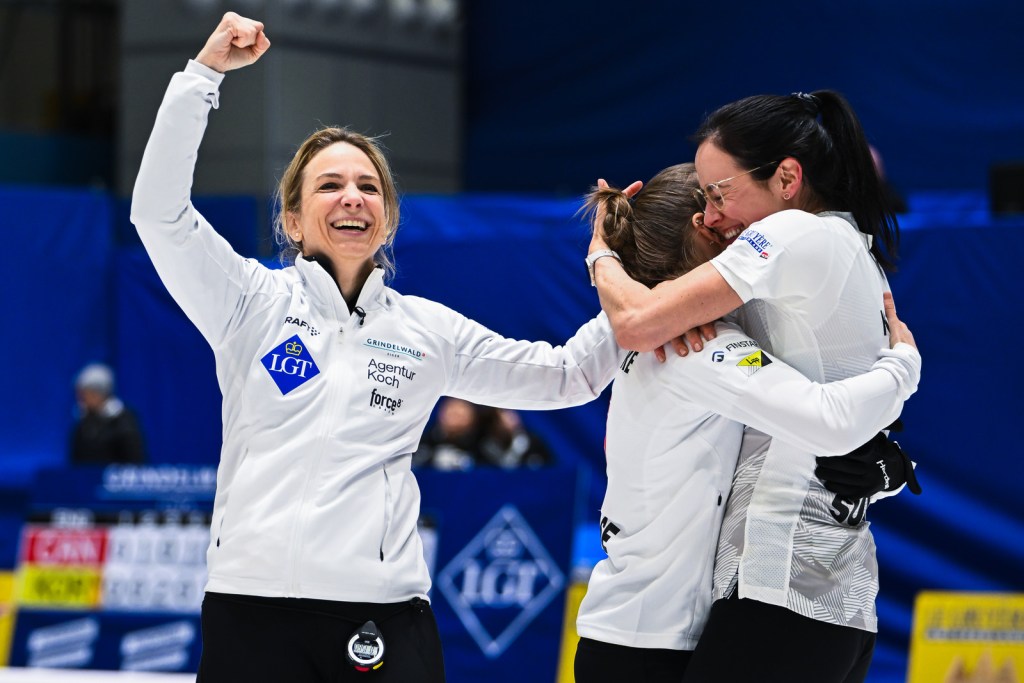
It will not have been the first season the word ‘retirement’ was directed towards her. On the face of it, quitting a well-paying project management job at the age of 39 to focus full-time on curling was a left-field move, yet it was that year she became a world champion for the first time.
Taking the leap that changed everything
“It was a financial risk to leave my job behind, but I also never regret that decision,” she said, while reflecting on her career.
“I think it was perfect for my life, but I also have no kids and no family that I have to take care of. But I think these days, it’s almost necessary if you want to be successful in curling. All the teams get better and better and if you don’t focus fully, then I don’t think you have much of a chance anymore.
“I felt if I want to reach my goals, that’s the way I have to go – and I did.”
Her journey goes back to the late nineties as a teenager, winning the 1999 World Junior Curling Championship. At 26, she qualified for the World Women’s Curling Championship for the first time but finished 10th out of 12 teams. The following year, they narrowly missed the playoffs by finishing fifth. She would not return for another six years, when a three-way tiebreaker at the 2013 World Women’s Curling Championship decided the final playoff place. After beating Russia, Switzerland narrowly missed out again with a defeat to the United States.
Following a four-year hiatus from the national team, her rink won the highly competitive Swiss Olympic Trials for the 2018 Olympic Winter Games against future teammate Paetz. Once again, they missed the playoffs.
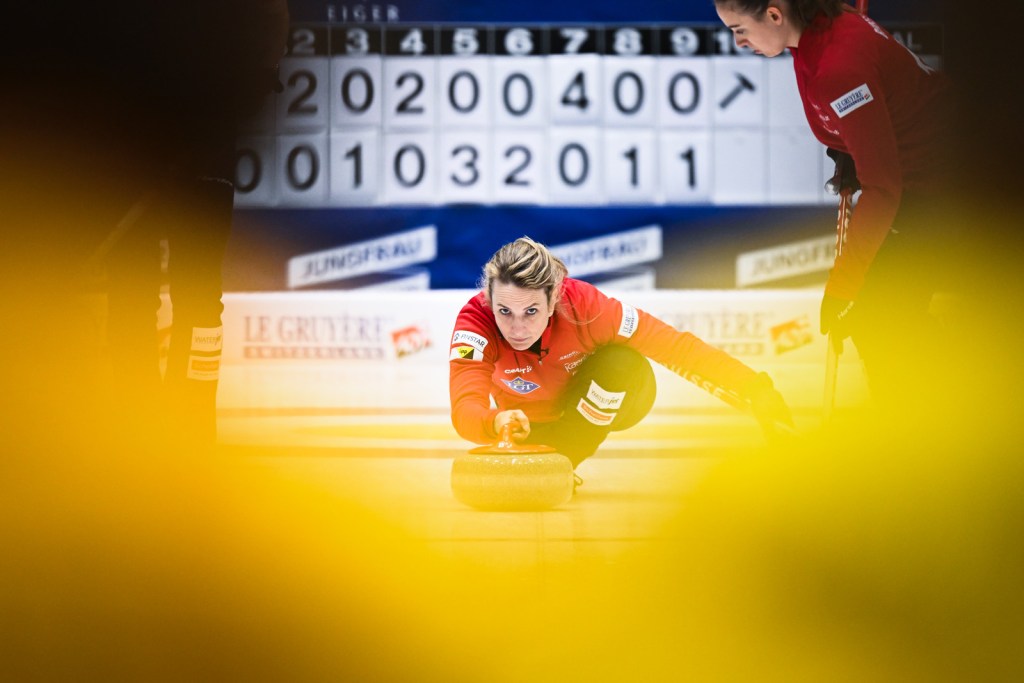
But crucially, it proved to be the catalyst.
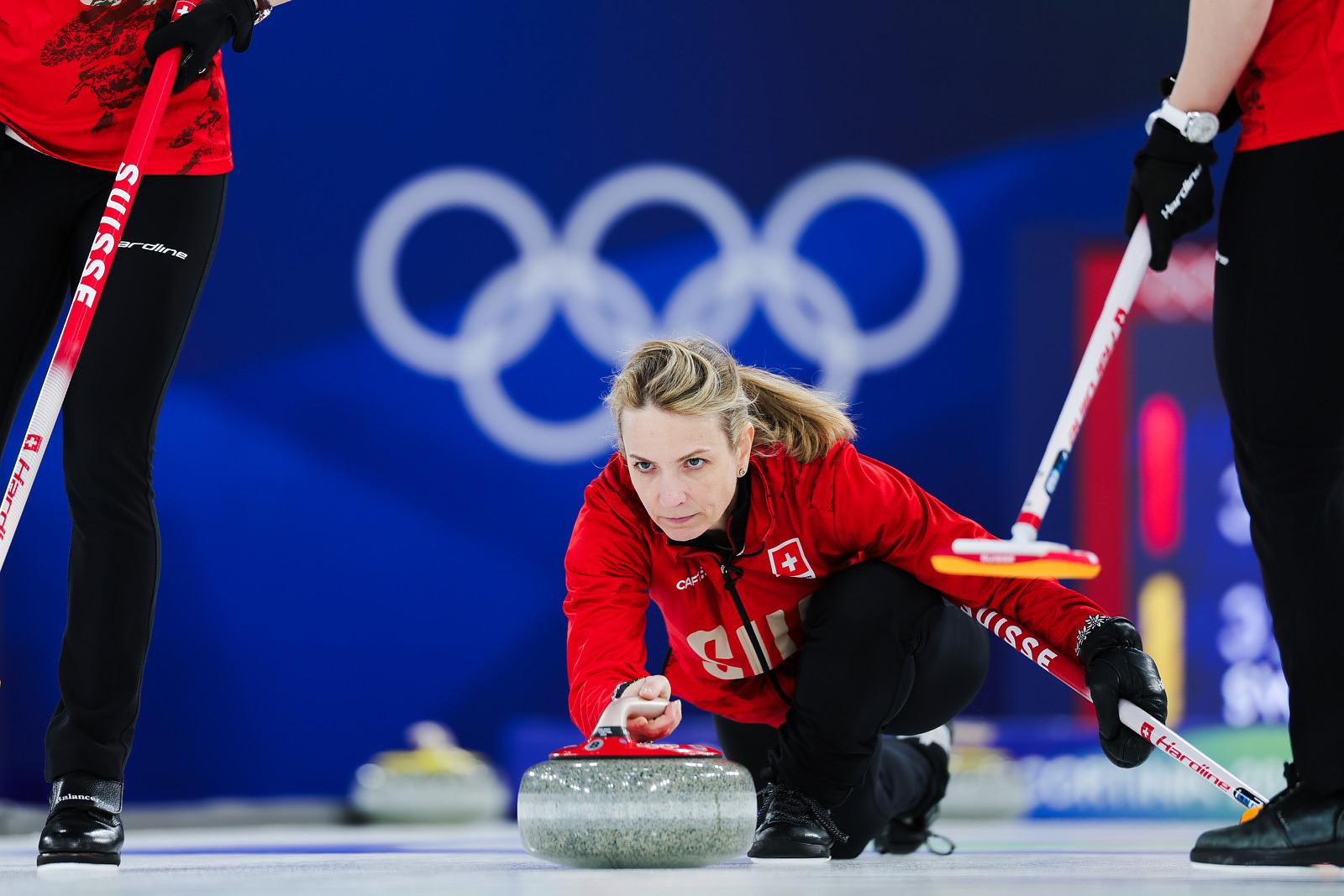
Paetz joined Team Tirinzoni for the 2018–19 season, beginning one of the most dominant eras in modern women’s curling. From 2017 to 2024, Tirinzoni represented Switzerland at every European Curling Championship, winning five medals from a possible seven, including two gold medals. Her defining legacy, however, began with her return to the World Women’s Curling Championship in 2019.
Building one of curling’s greatest dynasties
Victory over Anna Hasselborg’s Sweden in the final sparked a run of four consecutive world titles for Team Tirinzoni, a feat matched only by Niklas Edin’s Sweden in the men’s game. The Swiss rink also reached six consecutive world championship finals.
Tirinzoni considers her greatest achievement to be the team’s 42 consecutive World Championship victories from 2021 to 2024. The streak finally ended with a round-robin loss to Rachel Homan’s Canada, who would also bring their run of world titles to an end in the 2024 final.
“I think this is a record that’s probably never going to be broken,” she added.
When many athletes were thinking about calling time on their careers, Tirinzoni was only just getting started. The first half of the 2020s was defined by the remarkable Tirinzoni-Homan rivalry, with the two skips winning seven world titles between them. Switzerland earned the final victory between the two sides at the Milano Cortina 2026 Olympic Winter Games after coming up short in consecutive world championship finals.
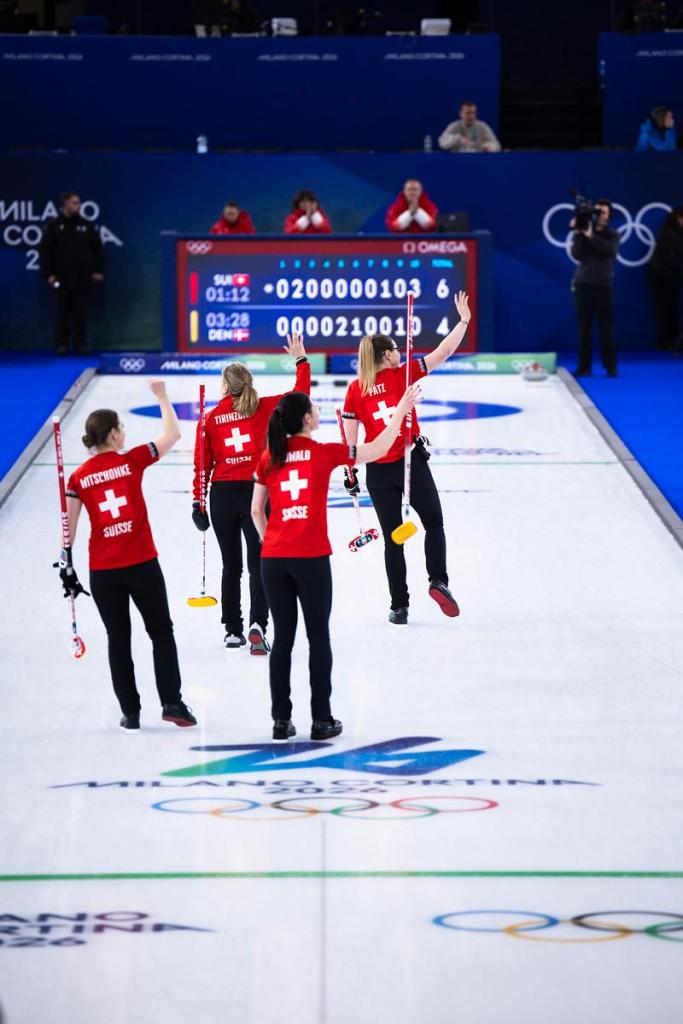
Neither team won gold in Italy – that honour went to the big-game specialist Anna Hasselborg, who claimed her second Olympic title and third Olympic medal – but it was a fitting final podium for Tirinzoni. Standing alongside two of the greatest skips of their generation, she finally secured the Olympic medal that had eluded her career.
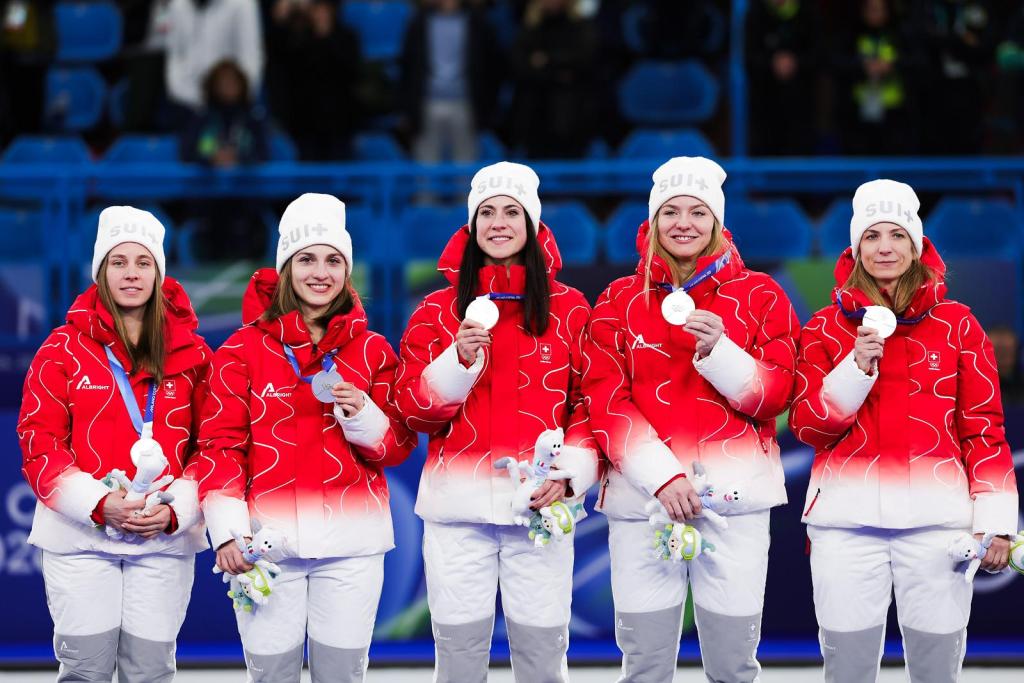
Most importantly, she was able to share the silver medal with her family, including her two nieces, saying, “to win a medal in front of them, it just means the world to me”.
Success was built long before the medals
But among all her achievements, Tirinzoni is quick to mention her teammates.
In her retirement post on social media, she listed all 24 teammates she played with throughout her career, including Esther Neuenschwander, who spent 19 years alongside her and whom she described as “a sister and a friend for life”. She also stressed how difficult it is to find the “right three teammates”.
Many nights were spent talking into the early hours, searching for solutions to challenges they faced during tournaments. Those conversations often happened far from the spotlight, overshadowed by the victories that followed.
And those humble years, when they continued to knock on the door of the national team, often unsuccessfully, remain just as important to her as the famous victories that came later.
“If you look at my career, you think it went like this,” she said, gesturing a flat line, “And then just up high at the end of my career in the last eight years, but for me, it’s not really like this.
“The part before was very important and I really cherish all those moments I had with my teammates back then. I had my successes too, but maybe not the big ones, the one that counts, but for me, at that moment, it still was big enough. It’s really the whole journey that’s so important for me.
“When I look back, I can hardly believe that we all achieved that.”
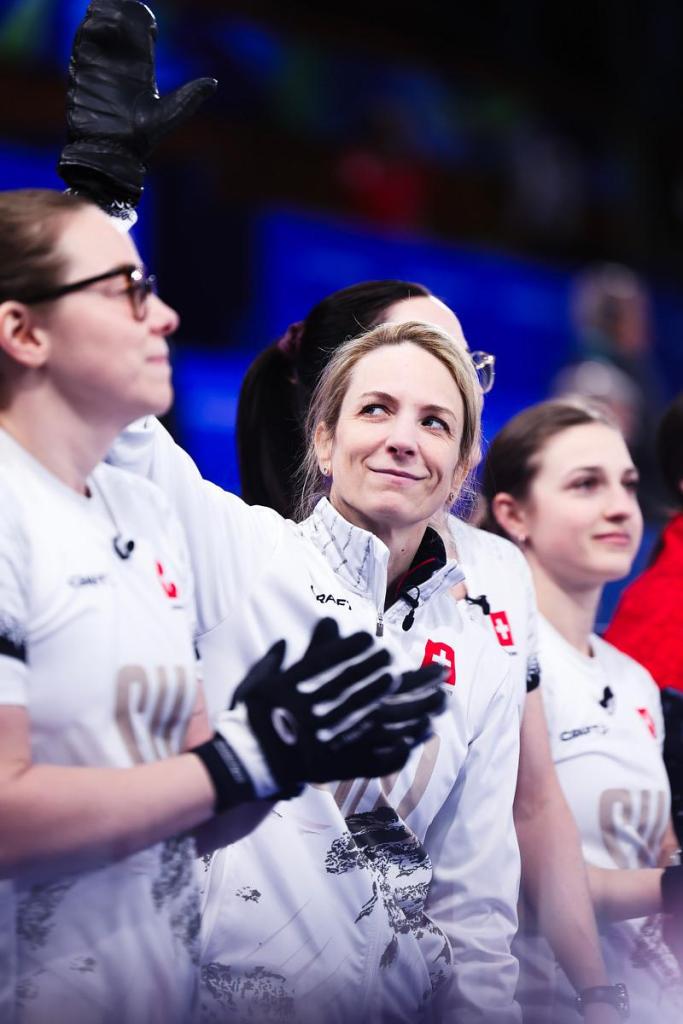
What’s next after curling?
She no longer faces the challenges on the ice—only the challenge of where life will take her next.
The door remains open to staying in the sport in a non-playing role “if the right opportunity comes along”, but she adds, “I think I could find a passion in something else”.
For now, that focus will turn to her relationships back home, saying she “felt that I never had enough time for friends” while on tour. Recent months have been filled with coffee catch-ups and movie dates.
It would be a shame if this is the last time we see Silvana Tirinzoni involved in curling. From her unconventional career trajectory to one of the sport’s greatest dynasties, she will be remembered as one of the greatest skips of the 21st century, leaving behind a rink that continues under Paetz’s name, but in her image.
Carole Howald will also be stepping back to focus on mixed doubles and the Rock League, while Selina Witschonke and alternate Stefanie Berset remain. They will be joined by Renee Frigo next season.
But even one of the greats started somewhere.
For 10-year-old Silvana, it was at her local club in the Canton of Zurich. That little girl would one day rewrite the record books. Now, standing on the other side of her career, she reflects on the advice she would give her younger self.
“Just don’t expect it to be easy,” she said. “I like this saying: ‘You have to be willing to get your heart broken to be a champion and you have to be willing to do it over and over again’, and I feel that’s so true.
“I had my heart broken so many times. I had some tough losses and tough decisions, but you have to be willing to take that challenge on and then a lot of good things happen.
“I’m so grateful I went this path and then went through all those lows, and at the end of my career, I had so many highs, I cannot even count them anymore.
“So it was worth every day of practice.”
Join the World Curling community!
Follow us on Instagram, Facebook, X, TikTok, LinkedIn and Weibo and by searching the hashtag #curling
Sign up for the World Curling Newsletter and receive monthly updates directly to your inbox.