
7 August 2026
The Tompkins brothers: Growing curling in Mexico, one opportunity at a time
Within ten minutes of chatting to Diego and Mateo Tompkins, it is apparent they like to make the most of every opportunity.
From becoming international curlers to creating a business that hosts Minecraft servers, the brothers kind of come as a package deal. Even for this call, Diego requests Mateo joins us so they could talk more about themselves as siblings.
“We have a great relationship off the ice as well,” says Diego. “I mean, we live in the same house. My brother’s actually upstairs from me right now.”
“Honestly, it’s all been pros; like, there’s really not a lot of cons,” adds Mateo.
It helps having similar interests and similar trajectories in life. Less than two years apart in age, they attended the same high school, as well as York University together. Their business came from playing Minecraft together during the COVID-19 pandemic and realising the cost of servers limited many players from accessing the game, including themselves. Instead, they stayed up all night learning how to host their own so they could play with their friends.
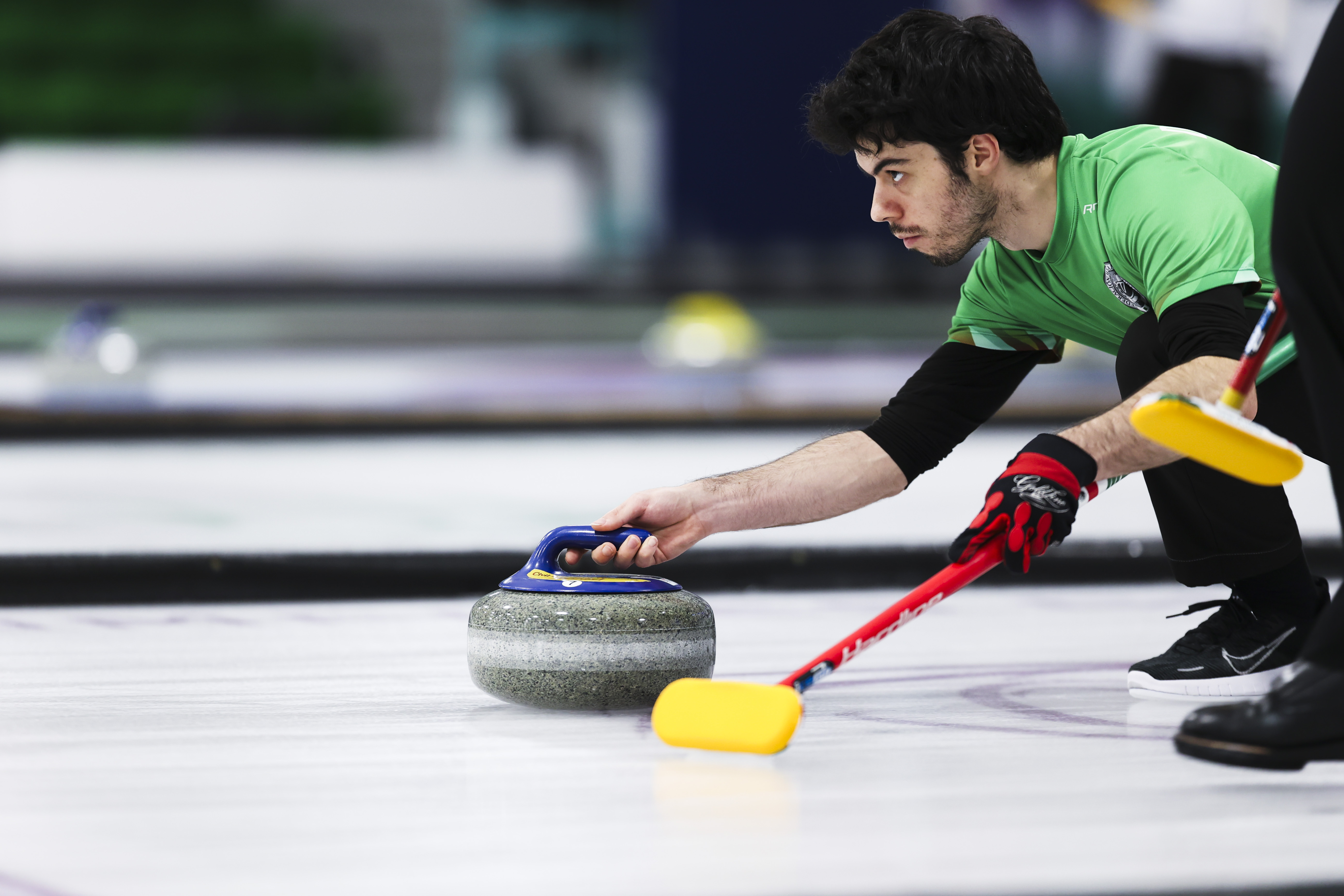
Away from the screens, they are representing a nation that is relatively untapped in the curling scene — Mexico. Home to approximately 133 million people, there are also around 12 million nationals overseas. The family of Monica, Diego and Mateo’s mother, were part of that group to immigrate to Canada. She would be introduced to the sport through her husband, Doug.
Both remain involved, with Monica as the team manager for the men’s and mixed doubles teams for Mexico, and Doug as the men’s team coach. But their sons’ introduction to the sport goes back nearly two decades.
A family tradition begins
They first played through Curling Canada’s Little Rocks programme at Bayview Golf and Country Club in the suburbs of Toronto. With a minimum age of six and Mateo six months short of that, Diego refused to play unless his brother could too, so they made an exception. Even from a young age, they displayed traits of what Spanish speakers call “La sangre llama”.
“That’s basically as long as I could walk, I’ve been curling,” says Mateo. “I think that’s a benefit because I’ve spent 17 years curling with Diego. Like, I’m so familiar with what he needs to hear, how he throws, his pain points, and that goes both ways.”
When they sat either side of an age group as teenagers, they incorporated the same rule. Eventually, this principle led to success.
“I don’t want to play on the men’s team if I don’t have Mateo with me, right? Because the other three teammates would have been new to us,” says Diego, recalling a chance to play with Mexico for the first time at the 2019 Americas Challenge.

“Miraculously, we won silver in that first tournament.”
While teenagers, they also got their first taste of competition against European and Asian sides in a winless campaign at the 2020 World Qualification Event.
“It was a bit of a beating,” says Mateo. “It was also new and you have all the officials watching and those games were live streamed and I think the stress and the pressure definitely got to us.
“I wish, looking back, that I could have enjoyed the experience more and enjoyed the anthem before when they announced you as Mexicans. I was just so focussed on my game and frustrated about the shots that I wasn’t making and I think coming into now that we won gold and we’re going to a bigger tournament, it’s important to me that we enjoy it.”
Building a team across continents
As with any warm country, recruitment is key to any success and hope of developing curling in the home nation. The quartet also consists of Ramy Cohen, who has lived in several cities around the United States, and Joaquin Villanueva Figueroa, whose home is Copenhagen, Denmark. Due to distance and resources, most of their training is done individually, with regular catch-ups online. For Villanueva, he only met the rest of the team at the last Pan Continental Curling Championships.
Team dynamics, which Diego says are “very important” to him, have been more difficult to establish due to the distance. They typically meet once a season to have dedicated ice training, last year meeting in Charlotte, North Carolina, where they also played teams from Costa Rica and the U.S. Virgin Islands. Back home, the Tompkins are fortunate to see familiar opposition in Toronto, which is home to many national teams, including Portugal, Hong Kong and Guyana.
“It’s funny, we go to the other side of the world to play an international event, and we’re playing the people we played last week at a local spiel,” says Diego. “It’s kind of neat that you know a lot more about your opponents and you know what their strengths and weaknesses are before you play them, which is sometimes quite helpful.”
This year they will head to Denmark to train with Villanueva, but the recruitment drive continues while competing simultaneously. During their recent trip to Scotland for the 2026 World Championship Pre-Qualifier, the brothers travelled to Edinburgh to speak to a 16-year-old who has Mexican citizenship. They also have ties to a new player in Northern Canada. Their goal is to build the teams to a point where a national playdown can take place.
From there, there is hope that the sport can gain some notoriety among Mexican residents to build local development.
“I haven’t heard of anyone who lives in Mexico playing curling,” says Diego. “I think we’re very lucky. In Toronto, there are dozens and dozens of clubs within an hour’s drive of our house.”
“We’re finding more and more people around the world and it’s always a pleasure to play with someone new, teach them the sport that I love, and getting to play with them,” adds Mateo.
Chasing the World Championship
On the ice, this year has brought the boys a reason to be excited. Diego partnered with Danielle Serra for the World Mixed Doubles Qualification Event in Dumfries, with the pair missing the playoffs due to a weaker Draw Shot Challenge score after a 3–3 round-robin record.
Just a few months later, he returned to the same sheets with the men’s team for the World Championship Pre-Qualifier in the Pan Continental region. Close victories over Chinese Taipei, India and Jamaica ensured they finished top of the standings, and an 8–6 win over Jamaica in the playoffs ensured their journey to the World Men’s Curling Championship did not end there, securing a spot in the next stage.
“There’s going to be some very tough teams in this next qualifier,” says Diego. “Our goal is to try and keep that team dynamics up.
“It’s going to be difficult to win that qualifier, but I’m hoping we can get some good games against most of these teams and show that we can compete.”
Impressively, the rink had not had an in-person practice between competing at the 2025 Pan Continental Curling Championships – where they finished sixth with a 6–4 record in the B-Division — and the Pre-Qualifier six months later. Having improved as a rink as the first tournament progressed, they decided to keep the same team for the second competition, noting that the biggest improvement was through their communication.
It also helps having Ramy Cohen as part of the rink for a long period of time. While no blood relation, he is effectively the third brother of the team, having enjoyed the same trajectory as Diego and Mateo, being on every team since that 2019 Americas Challenge.
Representing Mexico with pride
And family is an integral part of Mexican culture. Three generations of their family now live in Canada — their grandmother, their uncles and mother, and now them. This was not a case of curling through heritage. To Diego and Mateo growing up, free time was centred around their family, including holidays to see relatives back in Mexico multiple times a year.
“We always felt very involved in the culture of Mexico,” says Mateo. “The big family gatherings, very Mexican food… Every Sunday we’d go over to our grandmother’s house and she would cook us traditional Mexican meals, so it’s not like because we were living in Canada, we felt separated from being Mexican.
“I feel like we’ve always felt close to our nationality and being Mexican. It [curling for the national team] definitely makes us more proud to be Mexican.”
During the interview, Mateo brings the excitable, enthusiastic energy of a younger brother, with Diego more of a stereotypical skip — analytical and considered. Both personalities are key to a curling team, as is their bond. And with the other team members, there is a clear focus on doing a nation they have never lived in proud.
Waving the Mexican flag for the Tompkins is not just an opportunity to curl around the world; it’s a deep-rooted pride within generations of their family — something they wish to spread to families across the country.
“It’s an incredible feeling just to represent another country and getting to represent them, and bringing them to a finals is definitely something that you can’t experience that many times,” says Mateo. “It’s absolutely surreal.
“And I would love to keep doing that.”
Join the World Curling community!
Follow us on Instagram, Facebook, X, TikTok, LinkedIn and Weibo and by searching the hashtag #curling
Sign up for the World Curling Newsletter and receive monthly updates directly to your inbox.