
17 June 2026
How Xenia Schwaller became a World Women’s champion just two years after Junior gold
When you’re beating one of the best teams in the world, it’s usually on the international circuit, but sometimes you need to do it on local ice.
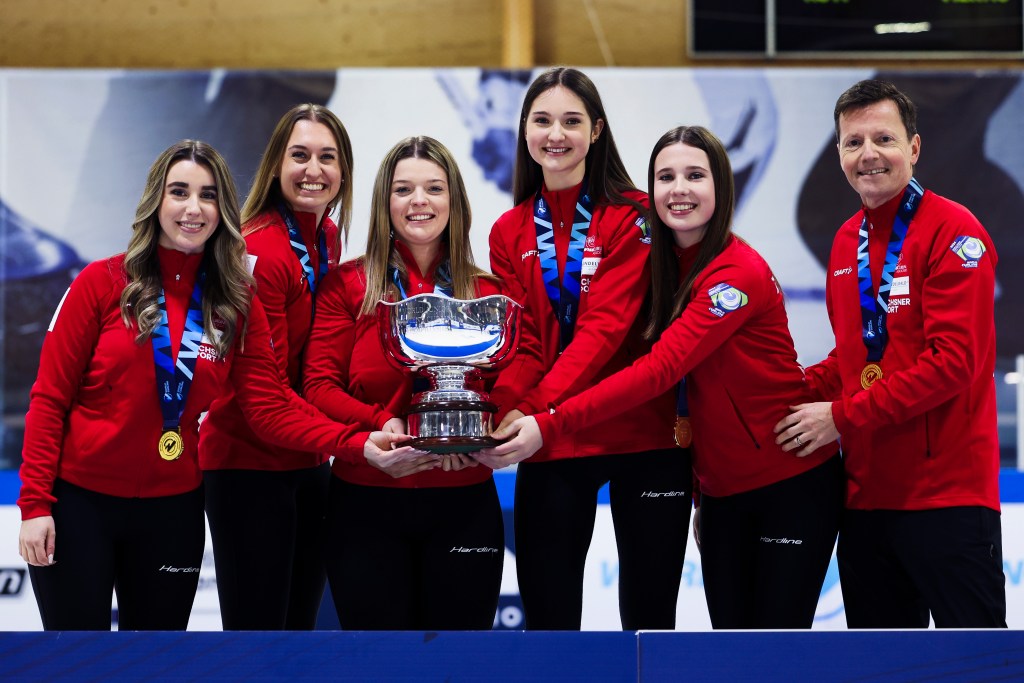
It has been a monumental rise for Xenia Schwaller’s rink from Switzerland. Just two years ago, they went undefeated at the World Junior Curling Championships 2024 to take gold.
Two years on, they won the Swiss Curling Championship for the first time, defeating the team skipped by four-time world champion Silvana Tirinzoni and anchored by six-time world champion Alina Paetz.
In the autumn, they sat just outside the top 10 in the world rankings after a promising record on the World Curling Tour in 2024, but last season is where they rose from rocketing rookies to serious contenders.
A look at the last season
They opened their season with a victory at the Oslo Cup, before winning the Shorty Jenkins Classic undefeated – a tournament that included a win over the world number one Team Homan. From the Autumn Gold Curling Classic to the Red Deer Curling Classic, they recorded four consecutive semi-final finishes before winning the Take-Out Trophy back home in Switzerland. Only at the Canadian Open and Players’ Championship did they fail to progress from the round-robin in 15 tournaments. By the time of the Olympic Games, they were a top-five ranked rink, but would watch Team Tirinzoni represent their country on their way to the silver medal in Cortina d’Ampezzo.
And the veterans – who once mentored Xenia and her junior teammates through a pay-it-forward programme hosted by Swiss Curling which her rink now participates in – thoroughly deserved their spot. Through the season, they met on three occasions prior to the Swiss Curling Championships and every time it led to Schwaller’s exit.
And in the top-of-the-table decider in Bern, a competition which decided who would represent Switzerland at the World Women’s Curling Championship 2026, it was the prodigy extending the handshake in the seventh end, conceding with the score finishing 8-2 to the favourites.
“The round robin game just didn’t really work out for us,” said Schwaller, who appears nonplussed by a poor result, “We didn’t play awful but just had too many mistakes here and there. The result looked more clear than the game actually was so I wasn’t too concerned.”
Concern naturally diminishes when you have done it before. Twice at the same competition too. While neither led to a Swiss title, Team Schwaller had defeated Team Tirinzoni at both the 2024 and 2025 tournaments.
But equally, Corrie Huerlimann’s team had done it before too. She denied Team Schwaller the national title the previous year in the best-of-three final and they now faced each other for a place in the final. After a close round-robin game, it was a one-sided contest this time around as Team Schwaller won 9-3.
Final versus Team Tirinzoni
0-4 against Team Tirinzoni soon became 0-5 in the first game of the final, losing out in the extra end. The statistics told one narrative that the 22-year-old did not see as a reality.
“The first final was a really, really close game too and I knew if we play the next final like we did our first we would get a good chance of winning,” she added, “We just need the hammer in the last end which we didn’t have in the first final.
“We were just sticking to our routines because we felt quite good. After the game we sat down and yeah, we were frustrated. But we were so hungry to win the second final and get a chance to play the third. I just thought the team chemistry was really good and I went to bed the night after we lost the first final with quite a good feeling for the next day.”
“We were just having breakfast talking about the game from the previous night and usually we don’t that.
“I remember that we talked about the first final because we just felt so confident about our team and we needed to talk about the last game because we should have won it.”
Relief was the word that came to her after winning the second final. The first finished 6-5 – this time the result went in favour of the youngsters, who stole in the eighth end to claim a 7-5 victory and their first of the season against their opponents.
Dealing with the pressure superbly, a close game was blown apart when Team Schwaller scored three with the hammer in the seventh end before stealing one in the last too, winning 7-3. Turns out you don’t always need the last shot to win.
“I was really happy for the team that it finally worked out as we won two silver medals the last two seasons,” she said.
“In all three finals we had three really good games in a row and it was just nice to see that playing so well gets rewarded and I was really happy for the girls and the coaching staff.”
Onto their first World Women’s Championship
After playing three World Junior Curling Championships – where they had an 18-0 round-robin record from 2023 and 2024 combined – they were ready to make their debut at the women’s level. Their opening game saw them lose to Japan, who had troubled them before on the tour.
True to her personality, she shook the 6-3 loss off to go on a fantastic winning streak.
“I wasn’t too concerned because my team played quite good and I knew I just have to play better and just get used to the arena, the ice, the atmosphere,” said Schwaller on her debut match.
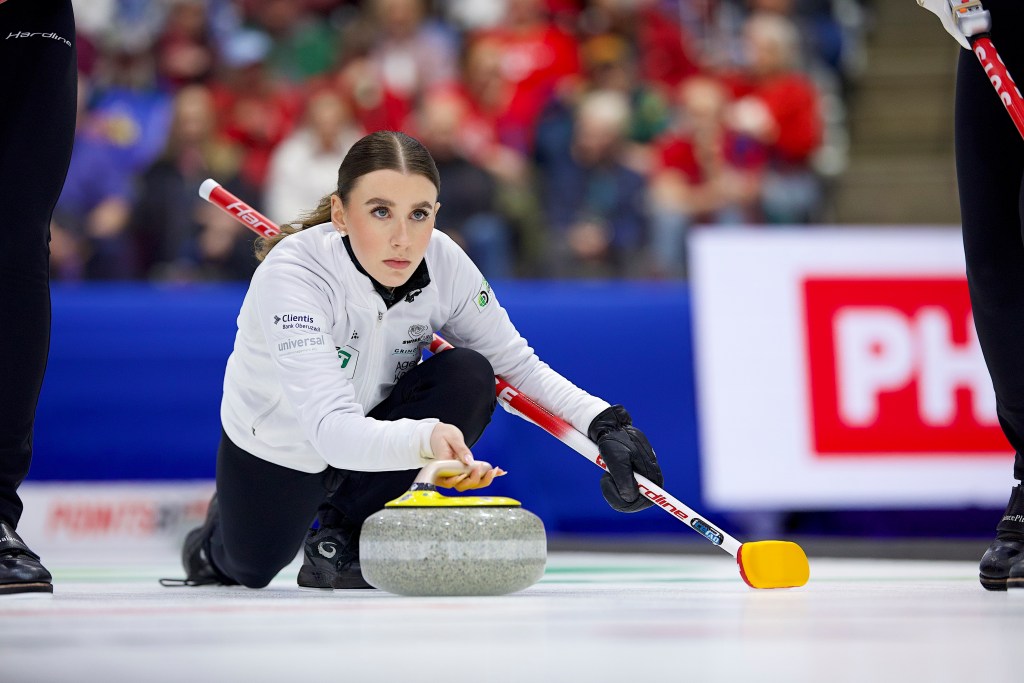
“We had a little bit of experience from World Juniors but it’s different to Worlds on the women’s side.
“We also didn’t have too long of a break; we had back-to-back games so I couldn’t really think too much about what happened in the previous game.”
With little room for strategic, sweeping or throwing errors, she noted the sharp rise in quality in the field compared to the 2024 World Juniors, where they took gold after winning 11 from 11 games.
Winning streak begins
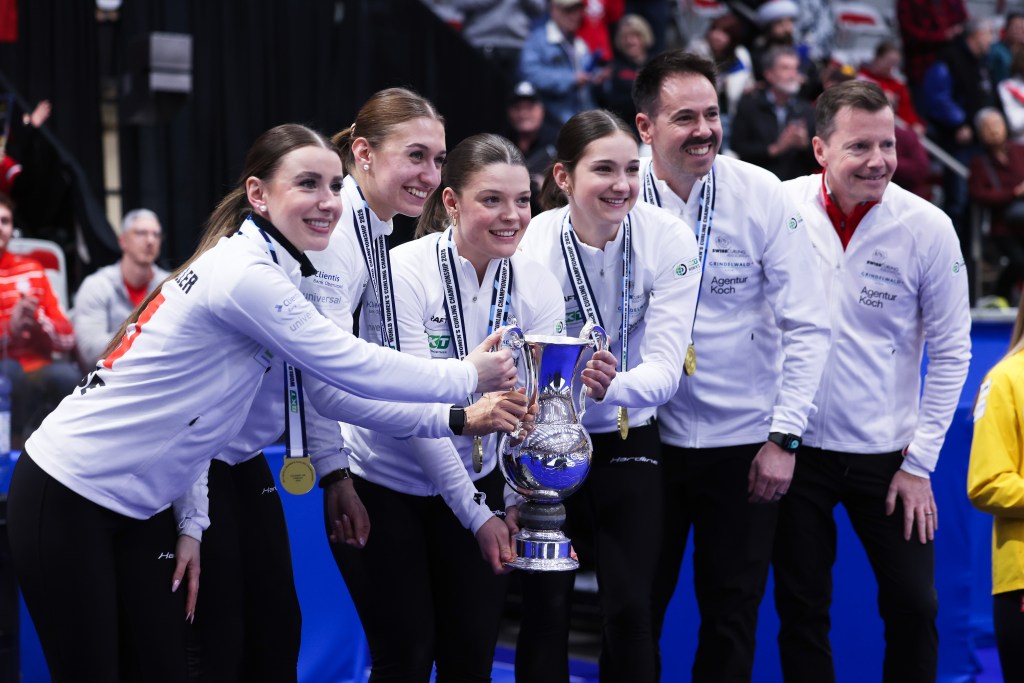
And this time around, she would win 11 of her remaining 11 round-robin games, which included victories over Kerri Einarson’s Canada and Isabella Wranaa’s Sweden. A rematch with Sweden came in the semi-finals, with the Swiss emerging as 8-5 winners after scoring high with the hammer. They faced Canada in the final, who had just thrashed Japan 11-3.

But again, when Team Schwaller threw last, they made it count. They scored a double with the hammer three times and wrapped up the game and the title in the final end with a score of one, defeating one of the best rinks in the world by a 7-5 margin.
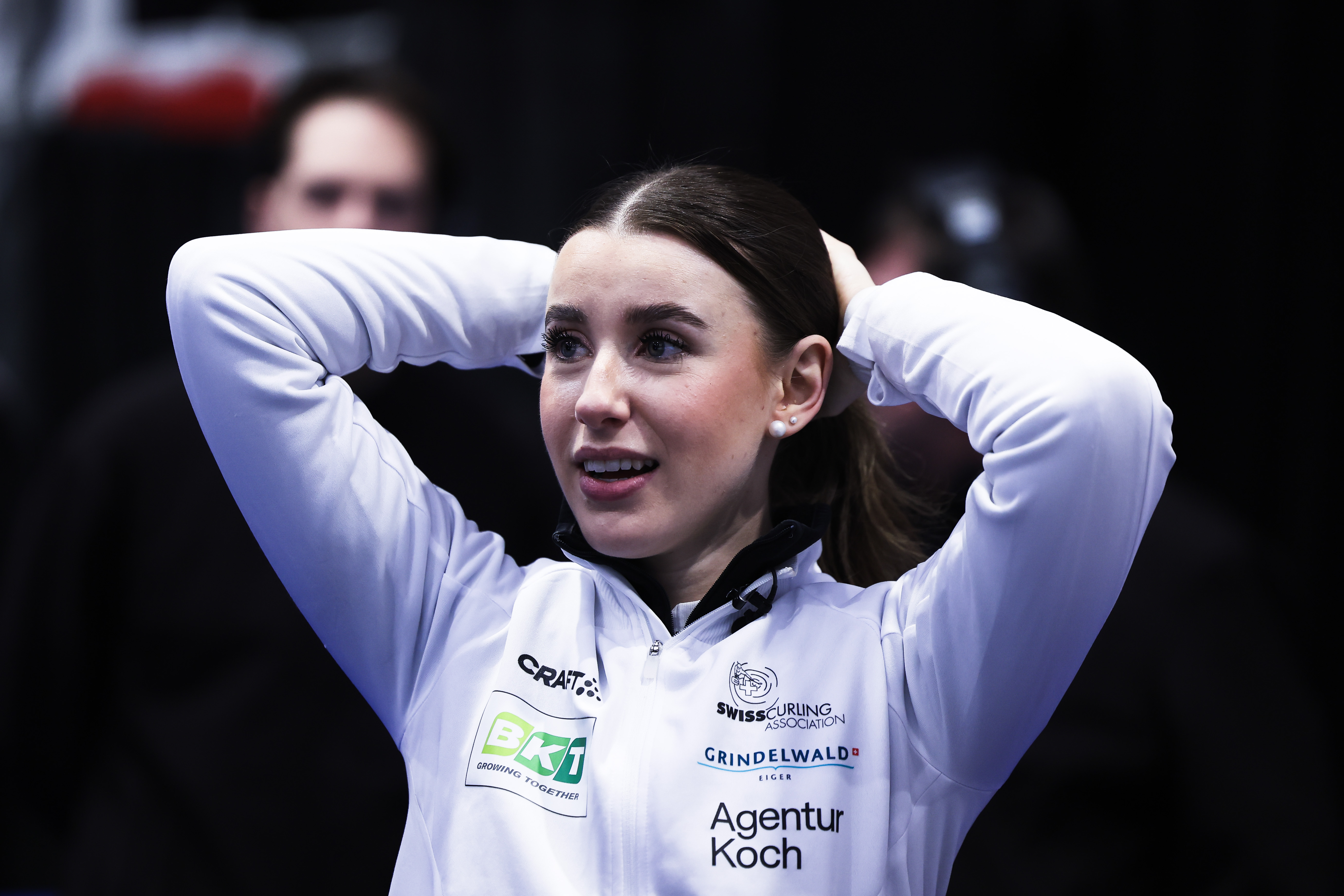
Their reaction to winning gold became a viral moment in the curling world, as the skip was lost for words in her post-game interview.
“I was just shocked,” she said, “I realised what happened, like I realised that the tournament is done, that we won but not what it means.
“That was and still is so surreal. You were able to tell by our reactions we were all like what’s going on.”
Curling in her bloodline
Despite coming from a curling dynasty, Xenia is the first of the Schwaller name to win a senior world title, an impressive feat considering her family includes cousin Yannick, her three-time European champion mother Heike who competed for Germany, and her Olympic bronze medal-winning father Andi and uncle Christof.
“I don’t really want to brag about that,” she humbly said with a laugh, “Like maybe if they say anything to me I’m just gonna mention ‘Yeah but have you won a World Championship before?’

“Yannick, he’s an Olympian; I’m not. So they’re still ahead of me.
“It was just very cool to look up to what they achieved, but also when I won a tournament I know there’s bigger things to win. It still is the case – I’m a world champion but there’s so many other things I can achieve.
“That can be positive but also a little negative because you also need to celebrate the things that you win in the moment. It’s cool to talk about to them and get some help along the way and that the whole family is involved, is really cool.”
From Juniors to the Women’s circuit
Integral to this success will be cohesion between teammates. For Team Schwaller, they have been together for a whole quad, now set to go into a fourth year unchanged and a fifth year together. Selina Gafner moved to third for the 2023-2024 season, as Fabienne Rieder moved from there to second. Formerly the alternate, Selina Rychiger moved back to lead, a position she held when Rieder was the team’s skip back in 2020.
They are separated by just 14 months in age and while Zurich is the skip’s hometown, the other three players all hail from near Interlaken. Sharing that close bond and having a familiarity is something that has served them well so far.
“We started in Juniors and now we’re on the Women’s side,” said Schwaller, “It’s kind of crazy to see where we started and where we are now.
“It’s really cool to see that we have a lot more potential. We’re not there yet, we have a lot more things to work on, but the longer we play together, the better we get to know each other.
“We have a lot of trust in each other which really helps so I’m really excited for the next years to work together and get even better.”
Silvana Tirinzoni’s recent retirement signals the end of another Swiss curling great, just as one has started to emerge.
Join the World Curling community!
Follow us on Instagram, Facebook, X, TikTok, LinkedIn and Weibo and by searching the hashtag #curling
Sign up for the World Curling Newsletter and receive monthly updates directly to your inbox.