
4 December 2025
Doors wide open: Festival of Rings welcomes all at Canadian Curling Trials in Halifax
The Canadian Olympic Curling Trials saw skips Rachel Homan and Brad Jacobs seal their spot at the Milano Cortina 2026 Olympic Winter Games, the most influential event to attract new audiences to the sport.
While the action inside the Scotiabank Centre in Halifax stole the headlines last weekend; outside the field of play, there were new methods of attracting new fans to the sport, long before the Opening Ceremony for the Games.
The Festival of Rings, an initiative delivered by the host committee in partnership with the Nova Scotia Curling Association, has confronted its relationship with its communities, in a bid to energise participation on the ice, as well as off the ice in volunteer roles or through fan engagement.
Pivotal to this is Rob Belliveau, Vice Chair of the 2025 Montana’s Canadian Curling Trials, who served as President of the Nova Scotia Curling Association from 2023 until June 2025 when the bid was won, but now serves as a Governor for Curling Canada, was inspired by diversity campaigns elsewhere in sport, he decided to take the initiative when he rose through leadership roles in the province.
New programme launched
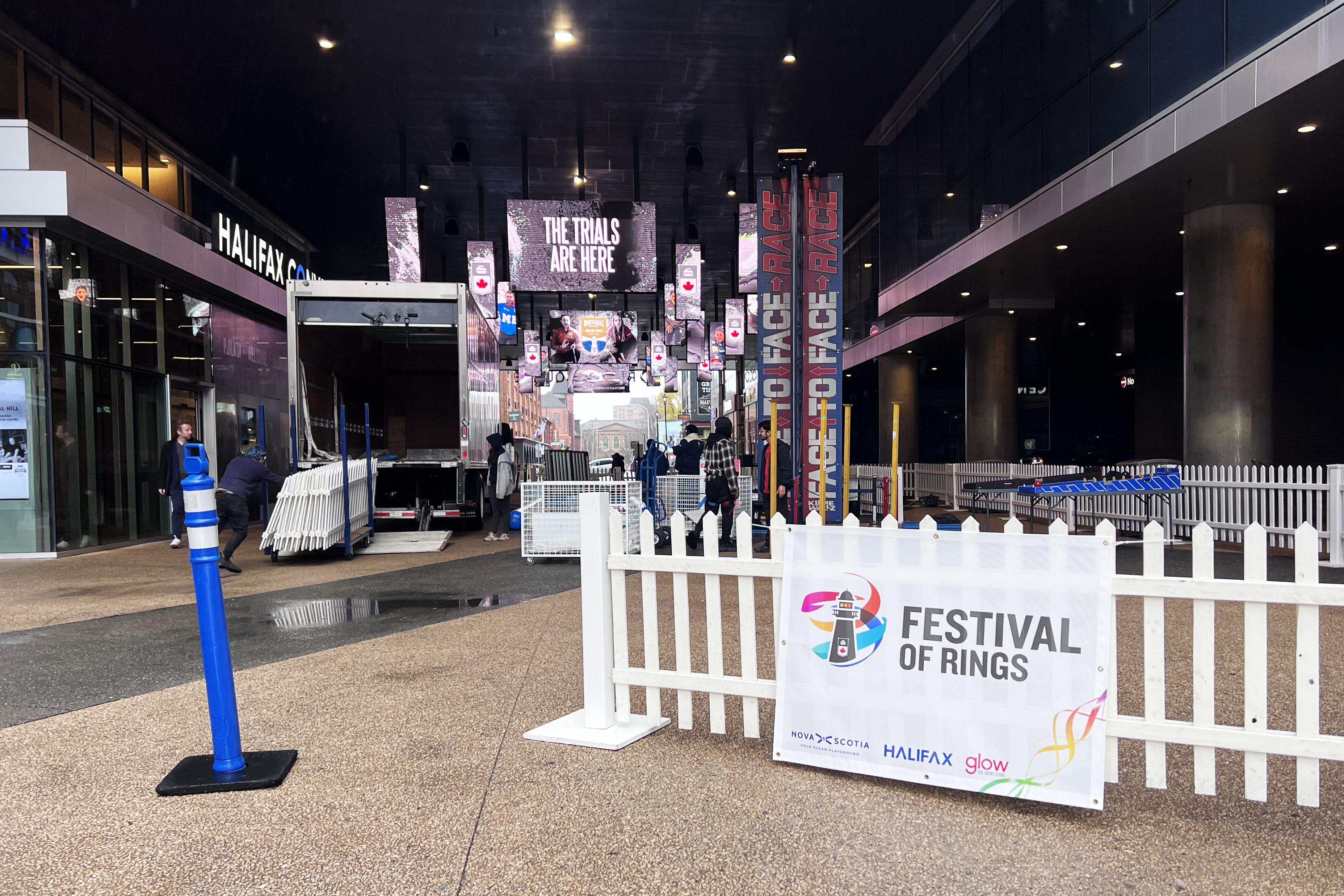
Part of this was aligning the Festival of Rings – a programme to attract new curlers and fans from diverse communities and cultures through meaningful volunteer opportunities that showcase diversity at Rogers Square in the city’s downtown area.
Supported by the Province of Nova Scotia and the city of Halifax, they formed a sustainable event taking place over four days from Wednesday to Saturday, at the end of the Trials.
The festival attracted people from all over with activities such as a rock climbing wall, axe throwing and foosball, but also inflatable curling. In addition, floor curling was part of the set-up for children and wheelchair curling, making it as accessible as possible for all.
“The public, if they’re down around Halifax, will see it,” said Belliveau during the event, “They don’t see a ticket booth, they don’t see anyone asking for money, they can just roll up and they can try it.”

This has long been in the pipeline for the bid and host committees, endorsed by Nova Scotia Curling, who won the bid to host the Olympic Trials back in 2023.
“When we won the bid, I remember filling out the 18-page document and there was a suggestion ‘to engage with community and indigenous groups’. And when I started writing it, and I realized that box is too small – and I’m going to challenge that ,” regarding diversity said Belliveau.
Before the nation of Canada existed, it was already home to indigenous groups across North America. Nova Scotia, the Latin translation of “New Scotland” was given its name by Scottish colonialists in the early 17th century. Before then, the Mi’kmaq people laid claim to the modern-day province as part of their territory called Mi’kma’ki.
It would take centuries for indigenous groups, of which most are referred to as First Nations people in Canada, to be given an influential voice in the sovereign state. Since then, sport has been used as one way to unite communities and engage with First Nations people.
Part of Belliveau’s objective was to provide space for respect of tradition and inclusion of the disenfranchised. His team – backed by Andrew Paris (Director of Festival of Rings), Maureen Ross (Director of Community Partnerships) and Simon Barrick (Director of Research) worked tirelessly with indigenous communities to provide a programme that supported them, that would also spread cultural awareness to non-indigenous members of the public.
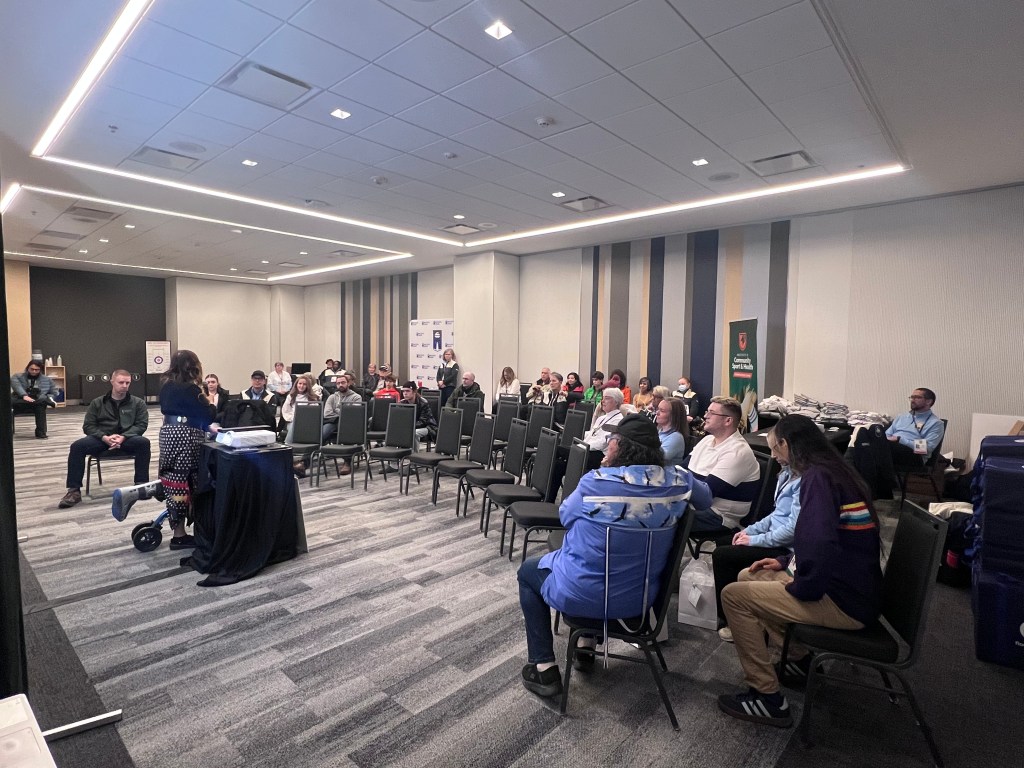
On the Friday, there was a welcoming ceremony, where indigenous elders from Nova Scotia, including Mi’kmaq, blessed the patch and curling event, inviting their indigenous peers from Alberta for the event.
“We’re going to open up some eyes to curlers to, once again, put this in the forefront when we wonder what land acknowledgements are and do,” he said.
“The Festival of Rings is meant to show that actions are what’s going to actually help move this dial and move this agenda.”
While Nova Scotia’s past was reflected on, its future is also being considered. A relatively new nation, Canada’s population today is built on immigration as far back as British and French colonialists. According to the 2021 census, 23 percent of Canada’s population were not born in the country, which has been known for its acceptance of refugees from around the world.

Accessibility for all
To support integration of newcomers, regional immigration services and community partners work in unison. At the Festival of Rings, information booths were set up with partners to inform the public about what they do, including the Immigration Services Association of Nova Scotia.
“We have these booths so that curlers, who are the majority of the fans here, can see that some of these groups that help challenge our thoughts and our assumptions around diversity inclusion, see that it’s not that hard.
“My goal is for some curlers to learn. There’s many curlers here that are participants in clubs, on boards at clubs, or even boards at provincial and territorial levels.”
While this is a great opportunity to support diversity, equality and inclusion and show its benefits to the public, it’s far more than words. Belliveau makes it clear that the core idea is to ensure there is a legacy where people will try curling for the first time and take it back to their communities.
This is being achieved by supporting the funding of free floor curling sets and having educators teach them how to play and train others and is all part of the province’s goal to increase participation in the sport, as well as bring a diversity of opinions to its decision-making.
Part of this has been their work with Partners Transforming Curling, an independent group consisting of sport researchers from academic institutions and curling stakeholders that also work alongside Curling Canada and World Curling. Their goal is to study the social development of the sport in the country.
Curling Ambassadors take to the streets
That consensus shows in what Nova Scotia Curling continue to do. During the Festival of Rings, the team’s Curling Ambassadors took to the streets to give the public free tickets to the Olympic Trials, whilst explaining how the sport works. Among those who received free tickets were families from Ukraine, Nepal and Brazil
“We’re activating people that would never have looked at the sport,” said Belliveau.
“The community partnership groups that we’re working with, we’ve been able to get tickets for their groups free of charge for multiple nights this week and days and we’re going to have our Curling Ambassadors sit with them in the rink and actually explain what’s happening.
Getting that enthusiasm that we all know as curlers and curling fans into groups that have no earthly clue what a rock is, what sweeping is or how our sport works.”
For curling, immigration has had such a major impact on its global reach. Many developing curling nations were started by those from a curling-rich nation who moved elsewhere, or those who moved to a curling-rich nation from somewhere without a team.
International impact
Helen Williams, who will skip Australia at its first World Women’s Curling Championship next year, emigrated from Scotland. The Philippines men’s team consists of four Swiss curlers with Filipino heritage. Even within Canada, the likes of Guyana, Jamaica, India and Hong Kong have benefitted from development, thus creating interest for the sport in their local communities as well as their home countries.
“I’ve always had a sentiment that I’m in a leadership position and I actually can help move change,” added Belliveau.
“You don’t have to wait for everyone else around you to do it. Don’t be afraid of that and don’t be afraid of making mistakes. The groups that we’re trying to impact and bring into curling will be accommodating, more than understanding if you mispronounce their name or a term that they have in their culture.
“The effort is more important than being perfect. The effort is nine-tenths of the battle. That will build the trust that your curling group is there for the right reasons.
“We’re not doing this for a D, E, and I checkbox. We’re doing this to grow the game.”
Join the World Curling community!
Follow us on Instagram, Facebook, X, TikTok, LinkedIn and Weibo and by searching the hashtag #curling
Sign up for the World Curling Newsletter and receive monthly updates directly to your inbox.