

18 November 2025
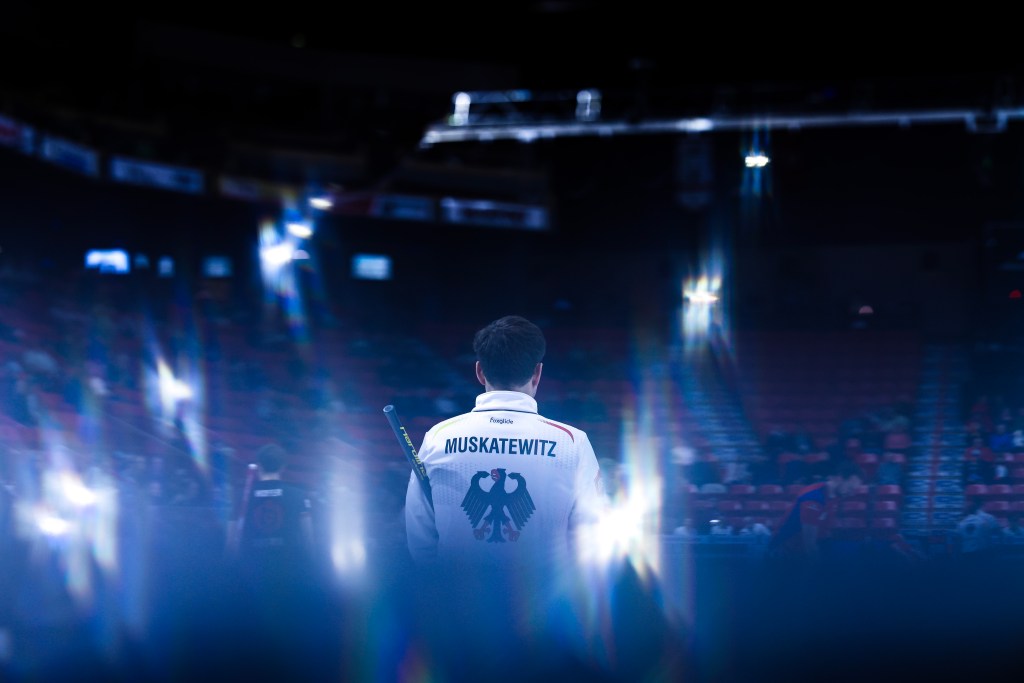
Underdogs? Not anymore: Germany’s Team Muskatewitz sharpen focus to defend European title
In 2004, Sebastian Stock led Germany to its seventh European title, giving the nation its fifth men’s gold in the 14 years since the country’s reunification. It would also start a 20-year drought until another European medal would be won by the men’s national team.
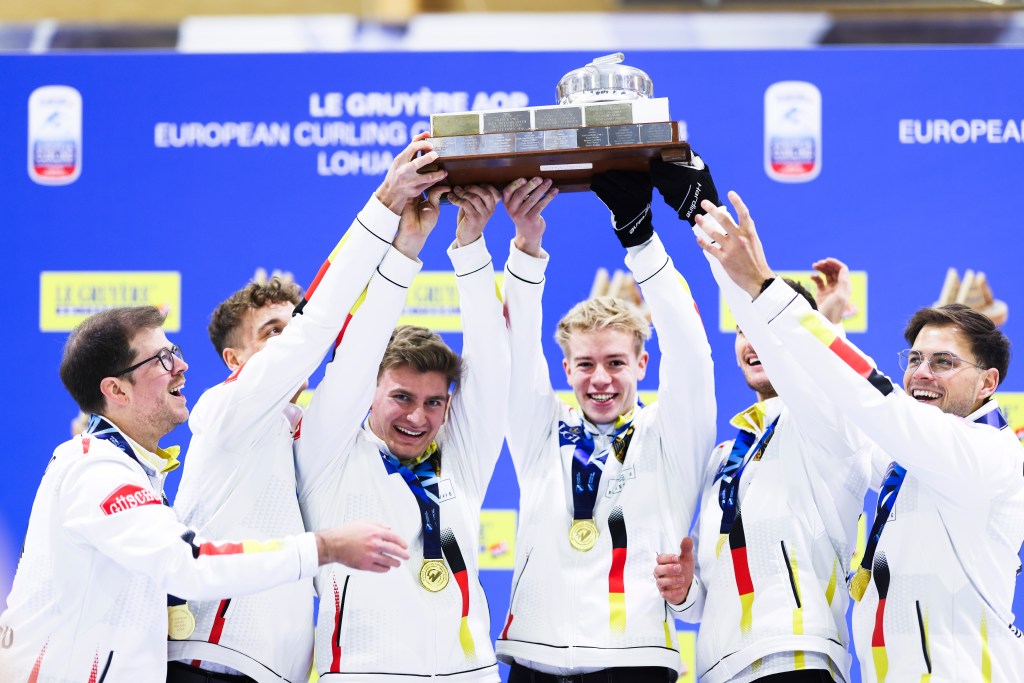
In an unlikely turn of events, this run would end in 2024 as Marc Muskatewitz led his young rink to glory in Lohja, beating Bruce Mouat’s Scotland.
The 29-year-old was competing in his sixth European Championship and his third as a skip, where he finished fourth in 2018 along with Sixten Totzek. With Totzek later taking over as team leader, Muskatewitz stepped back in late 2022 to dedicate time to his university internship.
A new team built on drive and youth
Upon his return at the start of 2023, focus turned to his next steps. Sometimes in life, it feels like things come to you. For him, that came in the form of Benny Kapp, Felix Messenzehl, Johannes Scheuerl and Mario Trevisiol, the now two-time World Junior silver medallists.
A proposal was agreed between Muskatewitz and the team, who are all 23 years of age and younger. For the skip, he needed a strong foundation built on hungry athletes. For Team Kapp, they needed an experienced leader. What formed was a new Team Muskatewitz with Kapp, Messenzehl and Scheuerl part of the main rink, with Trevisiol as alternate.
“I knew that if I go back on the ice I will go fully into it with the high-weighted team and I knew the boys pretty long, especially Benny,” said Muskatewitz, who called his teammates “some of the best sweepers in the world”.
“I know that curling is the biggest thing in their life and what they want to achieve as a goal with medals.
“They came up with this idea that I could be the leader who is experienced, has knowledge about strategy and they have three young guys who are fully motivated going to the gym, making all the athletes work much more than my old team had.”
This idea was mutually beneficial, so they trialled this partnership at a training camp in Switzerland, where the skip acted as coach. It was ten days in each other’s company, in the same accommodation, where they figured out that their personalities and goals were similar. Team-building was key to their bonding, spending time mini golfing and most recently hiking at Lake Tahoe, while also respecting each other’s time alone.
“I think mostly the dynamic is an outstanding part of our team because we are all friends, we can talk to each other about every subject,” he added.

Lifestyle changes and going all in
The change in the team came with adaptions elsewhere. For Muskatewitz, a keen Alpine and freeride skiing fan, he had to hang up his skis to prevent future injury, having lived just 20 minutes away from the slopes in one of Germany’s most famous snow sports towns, Oberstdorf. He would practise in the morning before heading to the curling rink in the afternoon, in between studying at university.
Losing that cross-training between skiing and curling meant he had to find that fitness elsewhere, having to work harder in the gym to maintain the leg strength he had built up, particularly from when he was ski mountaineering.
The Grand Slam of Curling circuit has also brought career adjustments for the skip, who calls himself a “part-time 80 per cent engineer”. In his bid to become a world and Olympic champion, he is provided special holiday from the company he works for, but also dedicates lots of his paid holiday to the sport.
Meanwhile, the other four members of the team are still enlisted as sports soldiers in the army, supporting their skip in the management of the team.
Breakthrough seasons on the road to 2026
A split 2023–2024 season between junior and senior competition led to the newly formed rink uniting for their first World Men’s Curling Championship in 2024, where they finished an impressive fifth, inside their goal of making the top eight. Backed up by ninth in 2025, it secured their qualification to the Milano Cortina 2026 Olympic Winter Games.

Heading into last season, they were the youngest team to go to Lohja with an average age of 23. Youth is associated with inexperience, but their ambitious goal of making the European Championships play-offs was realised.
They capitalised on a mistake to defeat Magnus Ramsfjell’s Norway 8-2 in the semi-finals, and in the final, would stop Mouat’s rink claiming a fourth consecutive title, winning 9-7.
“There was a little bit of pressure off for the final because we already had a medal there,” said Muskatewitz.
“For this medal game it was just about keeping the focus, keeping it close as possible and also Bruce made some errors which you usually don’t see. This is what I mean when I say everything is possible in the play-offs.”

The victory brought family pride for two of the boys too. Kapp is the son of Andy and nephew of Uli Kapp. They won five world medals and three European titles together, with another generation joining them as a champion on the senior stage. Fittingly, Messenzehl’s father Markus was part of that last German men’s rink to win a European title in 2004, creating a full-circle moment for the nation.
Managing expectations as reigning European champions
Now the moniker of “European champions” follows them at every competition this season. Going from an unlikely challenger to the best on the continent requires a change in mindset to manage expectations.
“We had a little rough start to the season, and now we’re settling everything together,” said Muskatewitz.
“Last season we had a really, really good season. It’s good to have the feeling that you’re now one of the best in the world and can compete and win against everyone.
“Everyone wants to win against us, so everyone gives a little bit more. We’re not in the underdog role anymore.
“We had to figure out how to handle that and how to get the consistency and the performance back. The result from the last Grand Slam [in Lake Tahoe] wasn’t what we were hoping for, but all the games were really tight and we had top teams in our group.”
Part of this recovery in form has come from working with a sports psychologist, who has quickly solved their key issue this year.
“It’s the not the goal of making this place or that medal that gives us pressure, it is more the expectation of making good stones and to play high percentage games,” he added.
“These were not that common at the start of the season, so that was a little bit frustrating that you had a level last season and now it’s not working.
“It’s a really big advantage for us now because we had this situation for the first time and we figured it out and we worked on it and made milestones from one Grand Slam to the next, so we’ve grown as a team more than we would have last season where everything worked out.”
Good stones are becoming more frequent, and with a return to the ice in Lohja, they will be looking to replicate those high percentage games that took them all the way to the top 12 months ago.
All A-Division games will be broadcast on the Curling Channel, however, there may be restrictions due to broadcast partner agreements.
Follow the live scores and results here.

Join the World Curling community!
Follow us on Instagram, Facebook, X, TikTok, LinkedIn and Weibo and by searching the hashtag #curling
Sign up for the World Curling Newsletter and receive monthly updates directly to your inbox.