
5 November 2025
How a small-town connection turned Danny Casper into an Olympic curling contender
Danny Casper could have easily been the name on the lips of Major League Soccer ultras, but his sporting fate would change thanks to one guy from his small town.
Briarcliff Manor in New York State is home to just over 7,000 people, yet this suburban village, around 30 miles north of New York City, produced two stars of American curling.
As fate would have it, Casper grew up in the same place as Andrew Stopera, who skipped United States to silver at the 2017 World Junior Curling Championships, before claiming bronze at the Pan Continental Curling Championships 2022 as part of Korey Dropkin’s team.
Stopera was already an anomaly in the area not known for a strong curling scene, following in the footsteps of his father Bill, who won the US Men’s Curling Championship in 2012 and later claimed silver at the World Senior Curling Championships 2024.
“Nobody curled, especially in New York, literally just Andrew,” said Casper, who credits Stopera for “guiding” him towards curling in those decisive days.
Inspired by the greats
The 23-year-old was still enjoying football — and played baseball and tennis as a youth too — when he was lured towards the ice. That decision was cemented when, as a teenager, he watched John Shuster’s American quartet win the Olympic gold medal at Pyeongchang 2018.
“It was awesome,” he said.
“I was curling, but I was still playing other sports as well, and I wasn’t really sure how much I liked curling.
“I knew I liked it, but did I want to focus on it? I wasn’t sure.
“And watching them win the Olympics definitely played a huge role in being extra motivated to go towards curling.
“I was thinking to myself I want to do that for people too, and I want to watch them be excited about something that I do.”
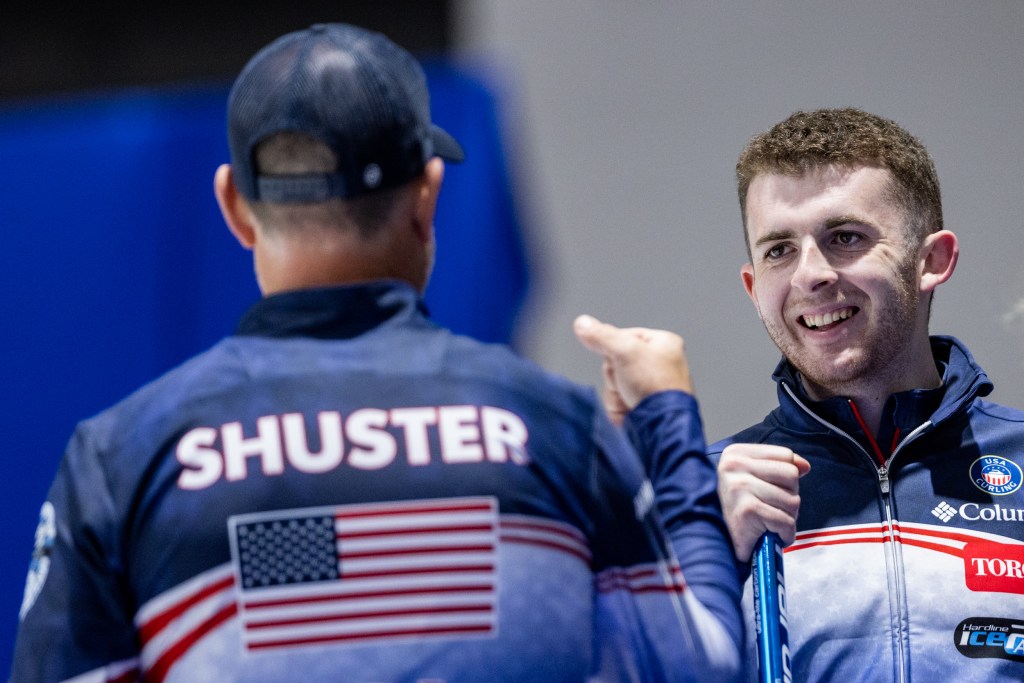
Shuster’s win was hugely significant for American curling and created more interest in the sport. Not only this, but the veteran skip paid it forward to the rising stars. Casper credits the Minnesotan for being a “role model and a friend” to him and supporting him in his off-ice career.
“It’s hard to ask for him to be a better ambassador of the game in the US than he has been,” he added.
“All of those guys have played a huge role just in their on-ice success, but also who they are off the ice, how nice they’ve been, to all the up-and-comers.”
Big results, big moves
What followed was a new generation of curlers — first Dropkin became a worthy challenger, and his rink is the only one since that Olympic title to win the US Men’s Curling Championship other than Shuster.
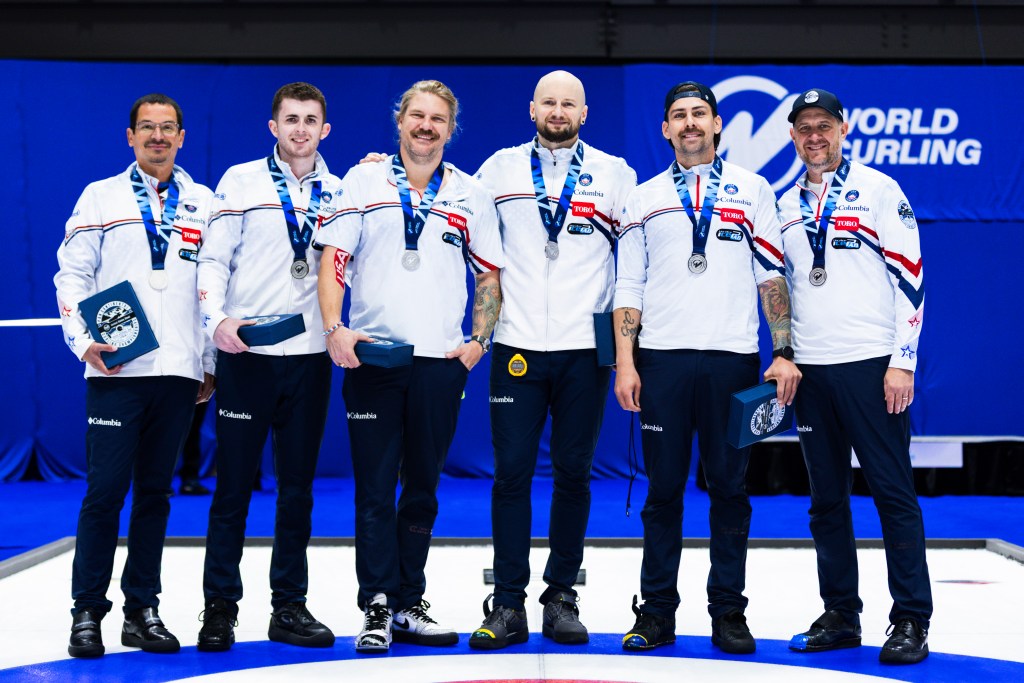
However, Casper’s rink have been on the level of their heroes too. Both in 2023 and 2025, they have finished runners up.
This string of strong performances coincided with big changes in the New Yorker’s life.
Convinced again by Stopera, he decided to move to a curling hub for his studies — picking no better place than the University of Minnesota, in the state where the sport thrives more than any other.
There, he linked up with 2016 Winter Youth Olympic Games and 2017 world junior silver medallists Luc Violette and Ben Richardson, as well as lead Chase Sinnett. The quartet would win silver at the FISU World University Games, prior to the national silver when they lost the final to Shuster. Sinnett departed the team for the current season and was replaced by Aidan Oldenburg. Although the result was the same this year, the cohesion between the quartet is starting to shine.
Team Casper went 7-0 in the round-robin and defeated Team Dropkin in the page play-offs. When the sides met again in the final, Dropkin ran out 8-6 winners after the extra end.
“The result is not what we wanted, and as nice as it is to go undefeated throughout the week, when you can’t win the last one, it only matters so much,” said Casper, with a tinge of disappointment still stinging in his voice.
“At the same time, it’s a good reminder that we can play well for an extended period of time and play well against the top teams and beat them.
“It’s still a little frustrating right now, but you can look back and see that we’re more than capable of winning that — it’s just a matter of doing the little things right.”
Learning important lessons
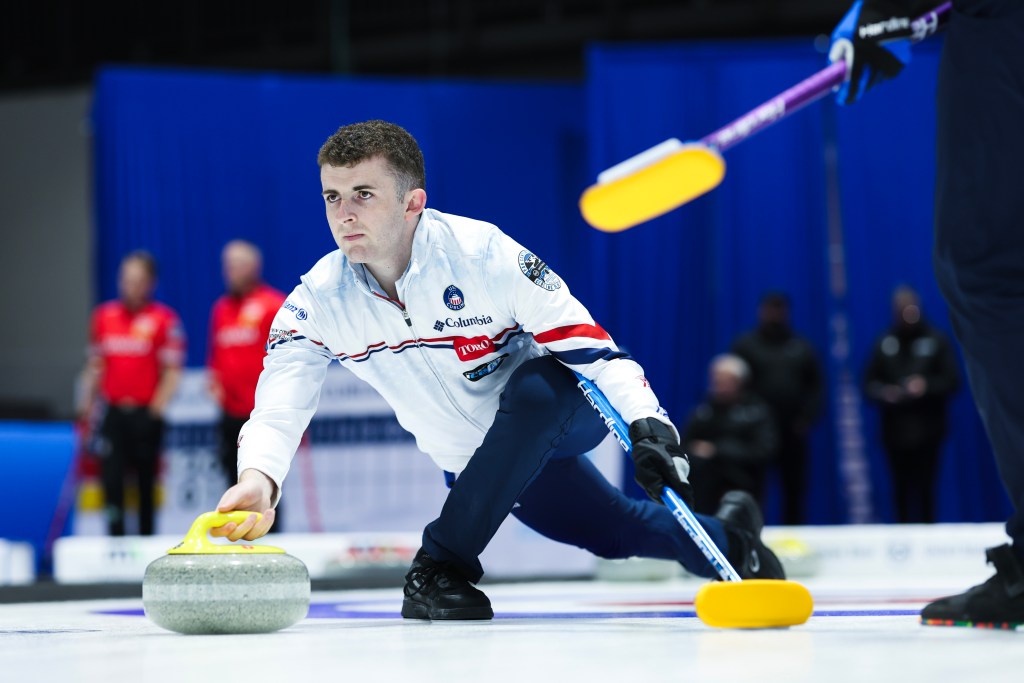
Casper notes that inexperience can no longer be used as an excuse for the rink, rejecting the notion of hiding behind your age — or indeed allowing that excuse to be valid at 23 years of age.
“When we were juniors we could get away with being young — I don’t view it like that anymore,” he said.
“A lot of people after this Nationals were like, ‘Oh, you’re young, you’ll have your time’, and I just hated that.
“We felt like we are in a prime position to win now and feel like we should be winning now and want to win more than we are.”
The learning lessons going forward include not treating a final like there is “some extra secret to it”, adding that “it’s just like any other game, it’s just a different time of day”. Patience has been important too, suggesting they tried too hard to “create the win” against Dropkin, rather than letting the game “come to us”.
But the success is also coming from the brutal honesty of the players, which he attributes to himself, Violette and Richardson playing together for three seasons now.
“The main advantage that we’ve had by playing with each other for a few years now is really leaning into those tough conversations and not being afraid to call each other out on things,” he said.
“That’s something that we tried to emphasise a lot this year and I think it’s going to be really helpful going into next year and moving forward.
“We took the mindset of, if a teammate calls you out on something, you should take that as a compliment because that means they want you to be better.
“We know each other better than anyone and know that those criticisms are coming from a place of love and wanting to improve the team.”
That tough criticism might be necessary during practice, but there is a clear bond in their downtime too. All living in Minneapolis, the team hang out a lot, despite all being “very different people” according to the skip.
Thriving US national programme
With Minnesota being a hotbed for the sport, the summers are often spent around rival teams, with the US national team programme joining a recreational softball league during the off-season, with the mixed squad including members of Korey Dropkin’s quartet, who also manage the team.
“The best softball player? I mean, it’s got to be me on the team, 100 per cent,” Casper stresses.
What the US national team programme has created is strong competition for Team Shuster, with potential successors looking to replicate the achievements of those they once idolised as youngsters. Another of the rising rinks is that of Caden Hebert, who claimed silver at the FISU World University Games earlier this year behind the highly-rated Lukas Hostmaelingen of Norway.
“Every US team would say the same thing, that they are ones to look out for maybe a lot sooner than people would think,” Casper added.
The rise to the top of American curling feels as if it is within touching distance and they have been knocking on the door for that national gold for a while now. Suddenly, selection for the Milano Cortina 2026 Olympic Winter Games is a possibility.
“We have our Olympic Trials in November, and if you were to ask me two, three years ago if that was a realistic option for us, you might not get a lot of yeses, but I’ve been fortunate to get on the right team with the right coaches,” added the skip.
“We know that we have a very real chance to win the Olympic Trials, and maybe a little bit ahead of schedule.
“I don’t really view us as the young up-and-coming team anymore.
“We want to win everything that Korey wants to win and everything that John wants to win.
“We want to play in Grand Slam events and World Championships, but those Olympics are always circled on everyone’s calendar every four years, and we’re not going to stop until we get there.“
Overcoming personal obstacles
Getting to this point has not come without its personal challenges for Casper though, as in June 2023 he was diagnosed with Guillain Barre Syndrome, a rare neurological disorder where the immune system attacks the peripheral nervous system, leading to muscle weakness, tingling, and sometimes paralysis.
“I could not walk at all, could not use my hands, like do anything.
“My hands and feet were tingling 24/7. You know how when your foot or your hands are asleep? That’s just how I felt at all times. I didn’t end up playing probably more than half of the year last year.
Casper has worked hard to manage this unprecedented hurdle, and feels that going through recovery has brought his team closer together.
“I think all of these challenges that we faced as a team created a lot of growth as a group whether that be being resilient, dealing with pain, or learning how to adjust in the fly at a new position and even a new teammate.”
“We feel like we’re stronger than every other team because of all that stuff we went through and we still are dealing with it too.
“They are patient with me when I’m in pain and I am working and dealing with it and being mentally unfazed.”
While we may never see the alternate universe where thousands of people are chanting the name Casper after he scores a 30-yard screamer or hits a home run, there is a possibility that he and his teammates cause another curling earthquake in a nation of over 300 million people.
Join the World Curling community!
Follow us on Instagram, Facebook, X, TikTok, LinkedIn and Weibo and by searching the hashtag #curling