
27 November 2025
50 Years of History: The European Curling Championships
On the 50th anniversary of the inaugural European Curling Championships, it feels like a fitting, round number to bring it into a new era.
The tournament was inspired by a six-nation competition held in Zurich in 1974. Hosts Switzerland, Sweden, Germany, France, Italy and Norway took part in the event — the predecessor to the official European Curling Championships, first taking place in Megeve, France in 1975.
Norway and Scotland would win the men’s and women’s tournaments respectively, with eight nations participating. Half a century on, the sport has expanded exponentially to 35 teams across three divisions in 2025. The bulging size of the European Championships led to the addition of the B-Division in 1991 and eventually, the C-Division in 2010.
The 1991 promotion-relegation introduction saw the round-robin format return for the first time in seven years, after a triple and double elimination tournament system was brought in for 1985.
In World Curling’s recent competition change the European Curling Championships will remain as a competition for the top ten teams on the continent. Next year’s championships will see the top eight finishers from this year’s A-Division and the top two finishers from the B-Division taking part.
With these changes, the European Championships no longer qualify teams to the World Championships. In their place will be the newly created ladder system that features a World B-Division and regional C-Divisions.
With that eye on the future, there is 50 years of reflection, with some great memories to look back on from top curlers still playing today.
Women’s champions and iconic memories
For eight-time attendee Silvana Tirinzoni, the 2023 and 2024 champion, her core memory came in her first appearance as a starting player, back in 2017 — a decade after her debut as an alternate in Fuessen. There she was on home ice in St. Gallen, skipping her team to the semi-finals.
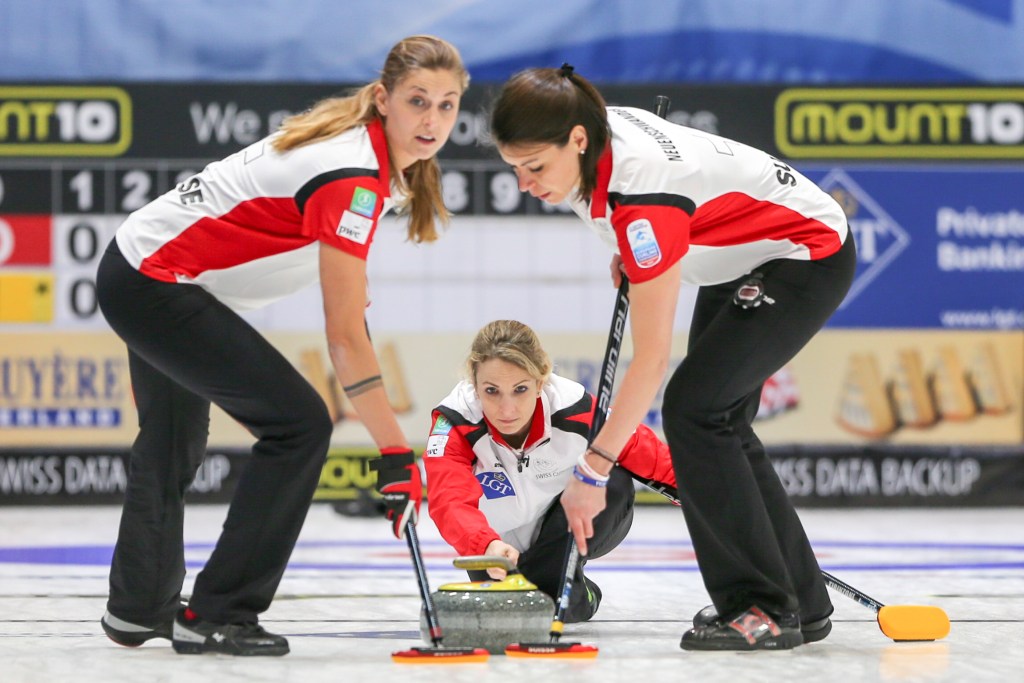
“That was actually very, very cool because there were a lot of spectators and, at home, so a lot of fans, and I think that was the best Europeans I took part of in,” the Swiss skip said.
“The Euros have always meant a lot to me. I was able to win five medals and those moments I’m going to cherish forever.
“It’s hard to say what is my best memory; it’s probably the first time we won a medal in Tallinn. That was my first international medal.”
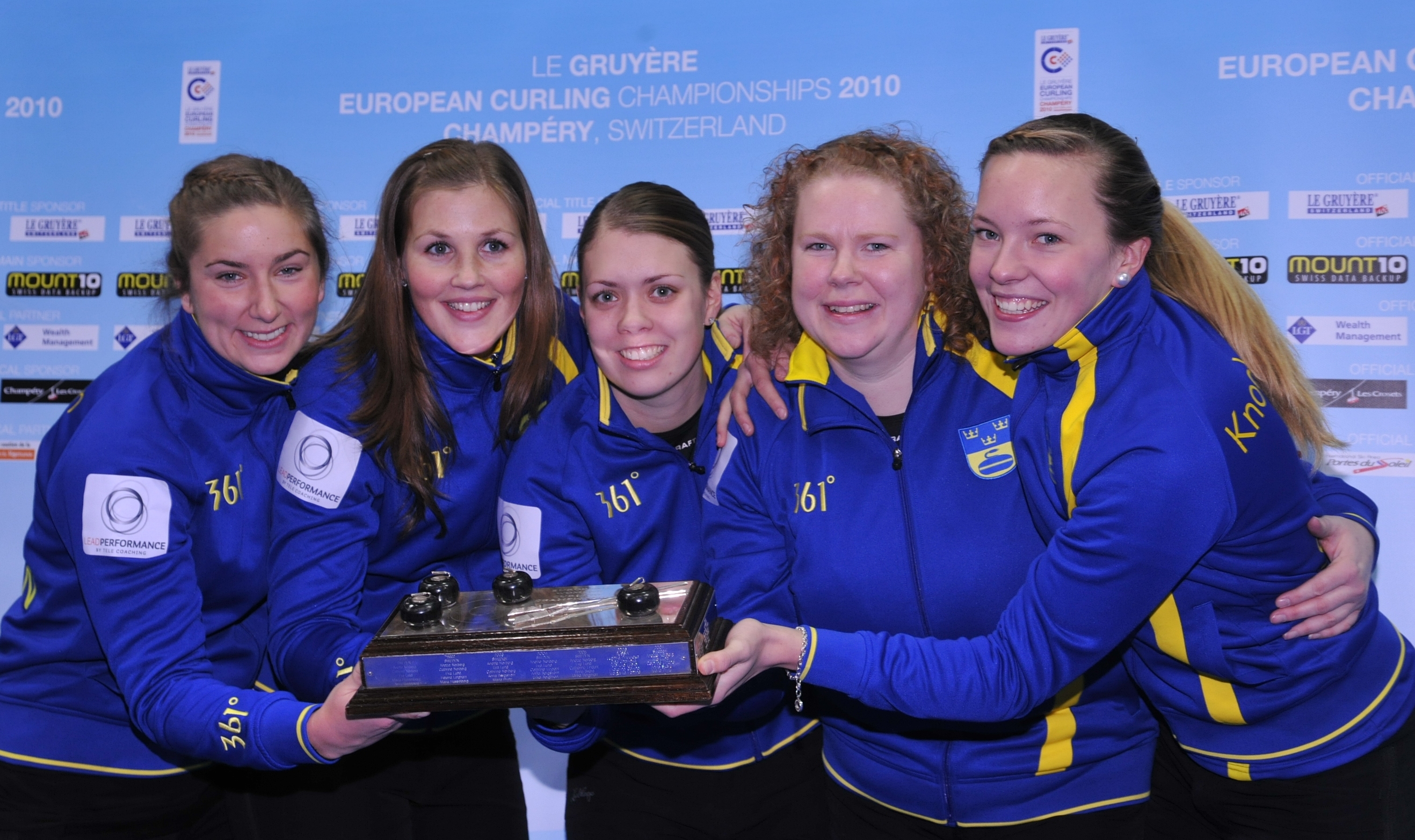
While Tirinzoni and Paetz are two of the most successful Swiss curlers, Sweden has dominated the medal table on the women’s side. The country has won 21 golds and stood on the podium 38 times from a possible 49 so far.
Anna Hasselborg is the country’s latest skip to lift the trophy back in 2018 and 2019, but the undisputed queen of the country’s curling scene, is Anette Norberg, a seven-time European champion who also won three world titles, two Olympic gold medals and is a member of the World Curling Hall of Fame.

During her career she made the women’s European podium on 12 occasions — the only other athlete to match that tally is Germany’s Andrea Schopp and Monika Wagner, who were also seven and six-time champions, respectfully. Schopp also appeared at the European Championships a colossal 28 times with Norway’s Dordi Norby behind with 23.
Other nations to win a women’s European title are: Scotland, Russia, Norway and Denmark. Eve Muirhead is the most-decorated Scottish curler with 10 medals, including three world titles. That’s nearly half of Scotland’s all-time tally of 25. Muirhead’s win in 2011 heralded the emergence of a true star — and one for Scots to be excited about. After all, it was Scotland’s first women’s European title since Betty Law won the first gold medal back in 1975. This was a wait of 36 years – the longest in European history.

Russia’s golden period came in the 2010s when skips Anna Sidorova and Victoria Moiseeva won three titles between 2012 and 2016. From 2011 to 2016, they made the podium five times from six. Norway’s two wins came either side of the nineties. The first was part of a stellar calendar year for Dordi Nordby and her vice-skip Hanne Pettersen in 1990 where they took world and European gold. Despite winning the 1991 world title too, a second continental title would elude the pair until 1999. For Nordby, she has the fascinating statistic of performing better at World Championships — winning 11 medals there compared to ten at the Europeans.
Denmark’s two European titles is the second biggest gap any nation has had between golds. Helena Blach Lavrsen, who would go on to win Olympic silver at Nagano 1998, skipped her team to the European gold in 1994, 12 years after becoming a world champion.
While the Danes made the podium in seven out of ten years in the 2000s, they would miss the gold each time. Their 2009 bronze was their last medal until 2022, when Madeleine Dupont, the young prodigy who won two world and three European medals all by the age of 22, secured gold for the first time in one of the best underdog stories in recent memory. She ended a 28-year wait to hear the Danish national anthem again at the medal ceremony.
Men’s champions and legendary teams
In the men’s tournament, the top teams from yesteryear remain amongst the best today. Sweden would take gold for the first time in 1977, with Scotland taking consecutive golds in 1979 and 1980. Today, they respectively have 12 and 16 gold titles.
Scotland’s success came in bunches — with back-to-back wins in 1988 and 1989, followed by three consecutive victories for Hammy McMillan’s rink from 1994 to 1996. After David Murdoch’s team did the double in 2007 and 2008, it would be another ten years before Bruce Mouat would win his first of four, with three coming successively, post-pandemic.

“It’s probably one of the first events that I really noticed as a junior,” said Mouat, “It was always broadcast pretty widely on Eurosport and it was something that we could aspire to.
“The first time that we got to play it in 2018 was pretty special. We were fresh into the men’s format and it was very exciting to be a part of something that had such a big legacy.
“The one in Aberdeen in 2023 was just as special because it was actually like a home championship and got to play in front of a lot of family and friends that were not at any of the other ones.
“We were meant to play the World Championship in Glasgow in 2020 and that never went forward and we thought that we probably weren’t going to get to play a home championship. When it did happen and then we won the gold, that just made it.”
Sweden were not as dominant in the earlier years, despite constant podium success. They only won their fourth gold in 1998 — the first of two won by the great Peja Lindholm. In 2009, Niklas Edin filled the void following Lindholm’s retirement when he took his first European title. Now, a seven-time world and European champion and an Olympic gold medallist, he is considered as one of the greatest to ever play the game.
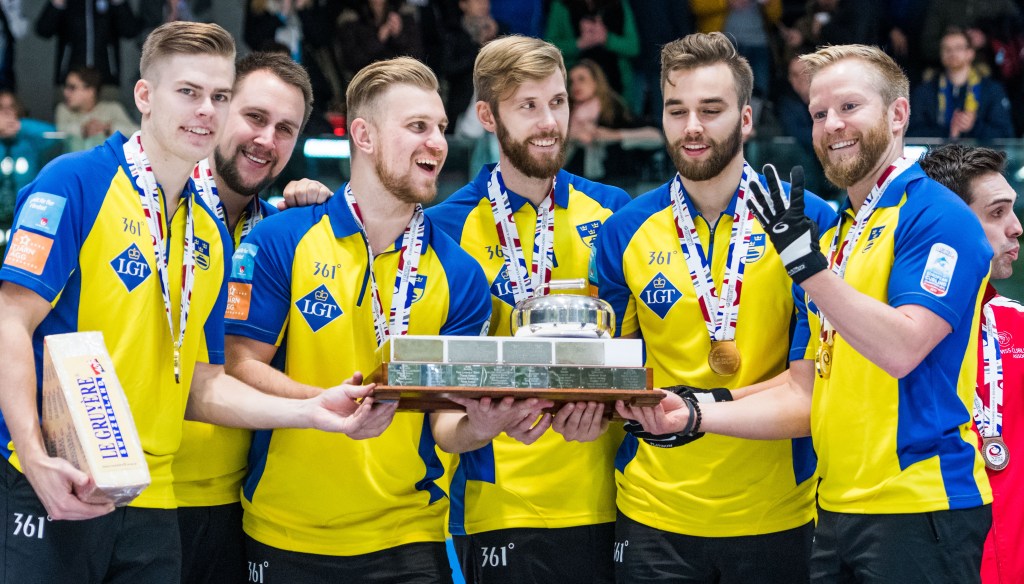
Switzerland has eight gold medals, with six of these won before 1986. Andi Schwaller would add a seventh in 2006, before the Sven Michel’s outfit won again in 2013. These “big three” nations have been challenged at the top in different eras. Germany has seven titles, including one in 1985 as West Germany. At the spine of their success is the Kapp family, who have been part of four of their winning rinks. Charlie and his son Uli were part of the 1991 team; before his other son Andy would join Uli on the 1992 winning rink. The brothers would win again in 1997 — and Andy’s son Benny took the 2024 title as part of Team Muskatewitz.
Norway’s five victories have mostly been scattered throughout the Championships, winning the inaugural men’s gold in 1975 under skip Knut Bjaanaes. 18 years later, Eigil Ramsfjell led his rink to victory in 1993. Then, it was another 22 years until Pal Trulsen’s squad won in 2005. From 2007, the country had their best run of form, making the podium ten years in a row. Pivotal to this was the late, great, Thomas Ulsrud, who skipped the nation in all of those tournaments, including the 2010 and 2011 editions where they claimed gold.
The only nation to win just one title is Finland, the victors in 2000, one year after their first podium. Markuu Uusipaavalniemi’s rink provided the nation’s three men’s medals in three consecutive seasons.
Expansion, diversity and new nations
What has been clear, is the diversity of the European Championships, which has hosted 42 national teams across their divisions in the last 50 years. In that period of expansion, we have felt the impact of the sport’s development.
In the past 20 years, Estonia, Ireland, Hungary, Latvia, Lithuania, Poland, Slovakia and Spain have competed in the top group for the first time in their history. A total of 22 men’s and 18 women’s national teams have played in the A-Division during that period.
And at its core — that is what is so beloved about the European Curling Championships. It has given us underdog wins to exciting new debutants and has been the starting point for many legends’ illustrious careers. It will have a different look come next season, but its rich legacy continues.
Follow the live scores and results here.
All A- Division games will be broadcast on the Curling Channel, however, there may be restrictions due to broadcast partner agreements.

Join the World Curling community!
Follow us on Instagram, Facebook, X, TikTok, LinkedIn and Weibo and by searching the hashtag #curling
Sign up for the World Curling Newsletter and receive monthly updates directly to your inbox.