

2 November 2024
Korean curling going from strength to strength
With Korea hosting next year’s LGT World Women’s Curling Championship, the Korean women’s participation in that event was already assured, so when Lee Jaebeom’s men’s team produced their 9-7 win over Australia in the men’s final round-robin session to take the last available place at the BKT Tires World Men’s Championship next year, Korea completed a successful Pan Continental Curling Championships.

Lee Jaebeom’s team of former schoolmates, who come from the southern part of Korea, has an average age in their early twenties. This team emerged from a field of about 50 junior teams and they now represent a new generation of Korean curlers. They will now go on to be Korea’s representatives at the worlds in Moose Jaw in April, trying to build from the strong foundations that other teams have developed in the past. Altogether Korea has made ten appearances at men’s world championships since 2003, with the best result so far being fourth at Las Vegas in 2018, under skip Kim Changmin. Lee Jaebeom’s team are determined to build on that legacy when they compete in Moose Jaw later this season.
Jaebeom said, “obviously, we got to learn a lot at this event, and it’ll be our first worlds, with the berth at the Olympics also at stake, so it’s an honour just to be involved.”
More generally, Jaebeom took the chance to explain how he got involved in curling in the first place. “My sister was playing curling at school and that’s how I got involved.”

His lead player Pyo Jeongmin also took a normal route to getting involved. He explained, “I started in a school club and then it got more serious after that.”
Both the Korean teams have been escorted in Lacombe by Lee Min, who is engaged by the national federation to help out Korean teams when they compete in Canada. He has been acting as interpreter at this event, particularly for media duties.
Status of teams in Korea
He said, “international participation by Korean teams is growing all the time, because they are lucky enough to have lots of funding compared with other countries. That means that most Koreans competing internationally are paid athletes.”
And Min traces this investment back to the 2018 Olympic Winter Games, held in Pyeongchang in Korea.
He said, “the 2018 women’s silver medallists, skipped by Kim Eunjung, started things growing and since then we’ve had a lot of teams spending time in Canada. The Olympic silver medallists were known as the Garlic Girls and Min reckons that curling started booming after their success. He said, “there are more schools taking part in curling now, for sure, and it’s growing slowly and steadily. I think it will grow steadily for a number of years. The federation’s focus is on the grass roots and youth development, with more junior and youth domestic events. The hope is that will eventually pay off internationally.”
Min also gave an idea about Korea’s Winter Olympic priorities. “In the Winter Olympics, Korea’s key sport is short-track skating – that’s the main focus and where the most medals come from, but there are two more areas that they’re focussing on, and that’s curling and speed-skating.”
Women’s team Gim
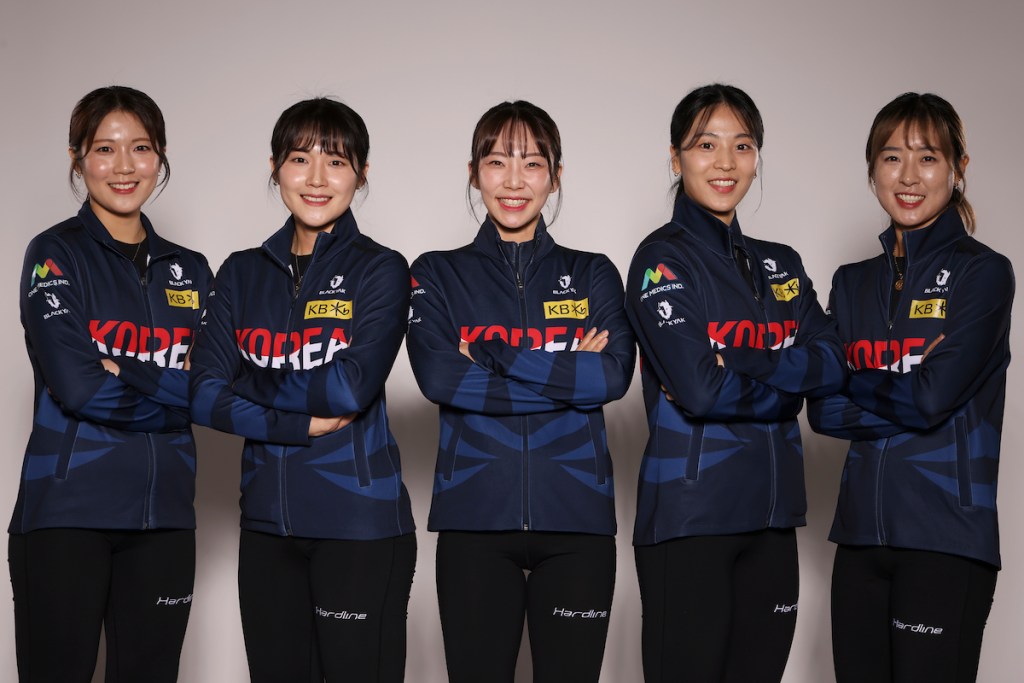
Seol Yeji plays at second on Gim Eunji’s women’s team and she agrees with Min’s view that curling is growing in her country. “Baseball is the biggest men’s sport and volleyball is the biggest women’s sport, but curling is getting bigger.”
Nowadays, to be a top Korean curler means that you are away from home a lot. As Yeji said, “when a team becomes the national team, they get full support from the Olympic Committee and they are full-time athletes. That support is pretty secure, so the teams spend four or five months every year in Canada, and we feel very blessed to be here and representing our country.”
Join the World Curling Community!
Follow us on Instagram, Facebook, X, TikTok, LinkedIn and Weibo and by searching the hashtag #curling
Sign up for the World Curling Newsletter and receive monthly updates directly to your inbox.