
8 September 2024
Arigatou, Merci, G’Day: The end of an era at World Curling
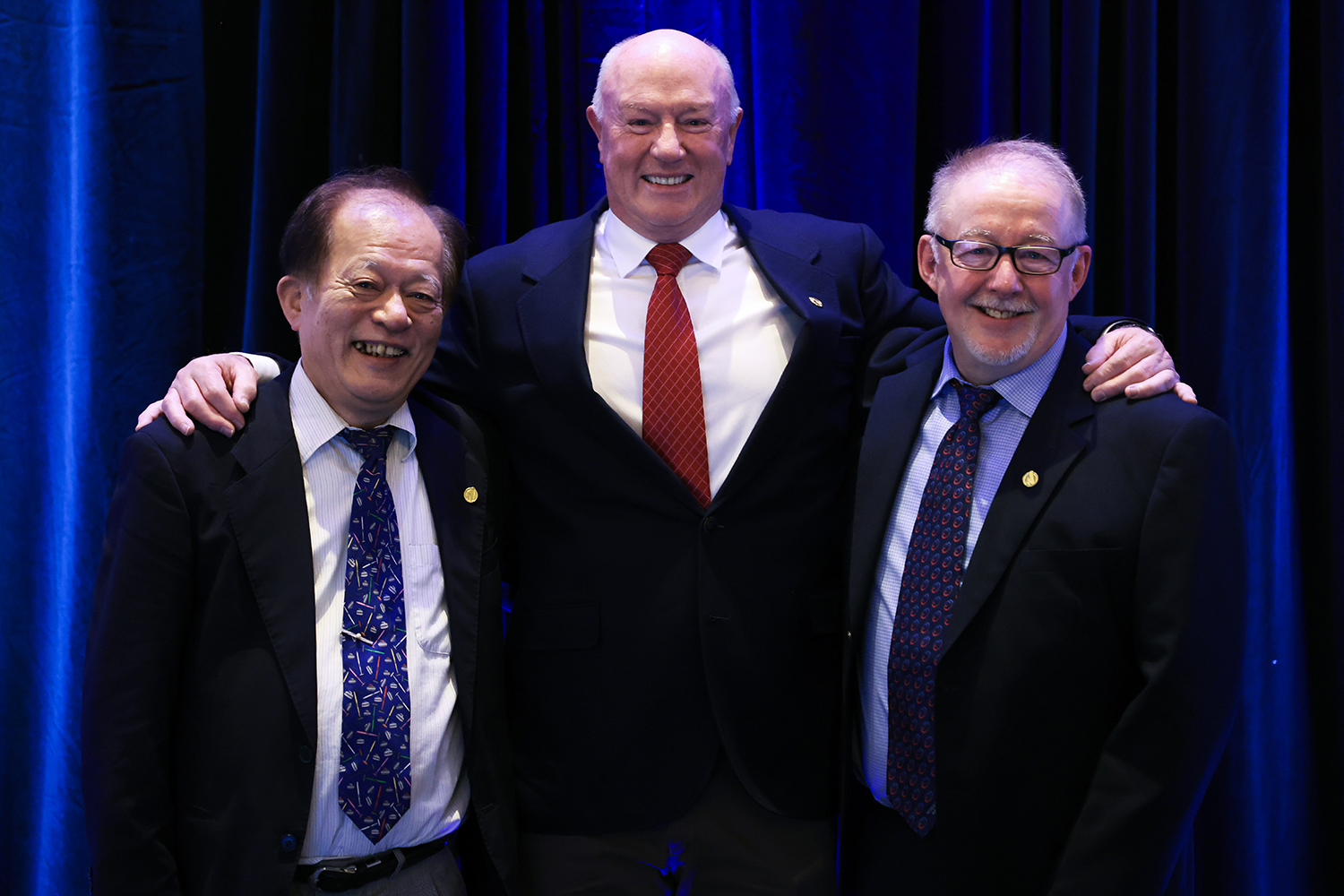
Three of the most experienced members of the World Curling Board have now stepped back following the 2024 Annual General Assembly.
With almost 40 years’ combined service, Vice Presidents Graham Prouse (Canada) and Hugh Millikin (Australia), along with Director Toyo Ogawa (Japan), have all reached the maximum length of service allowed by the Constitution, and were obliged to step aside.
In the lead-up to their enforced departures, all three have been invited to reflect on their experiences with World Curling, as well as their achievements and hopes — for their own futures, as well as the sport’s.
Toyokazu Ogawa — Sayonara and Arigatou Toyo!
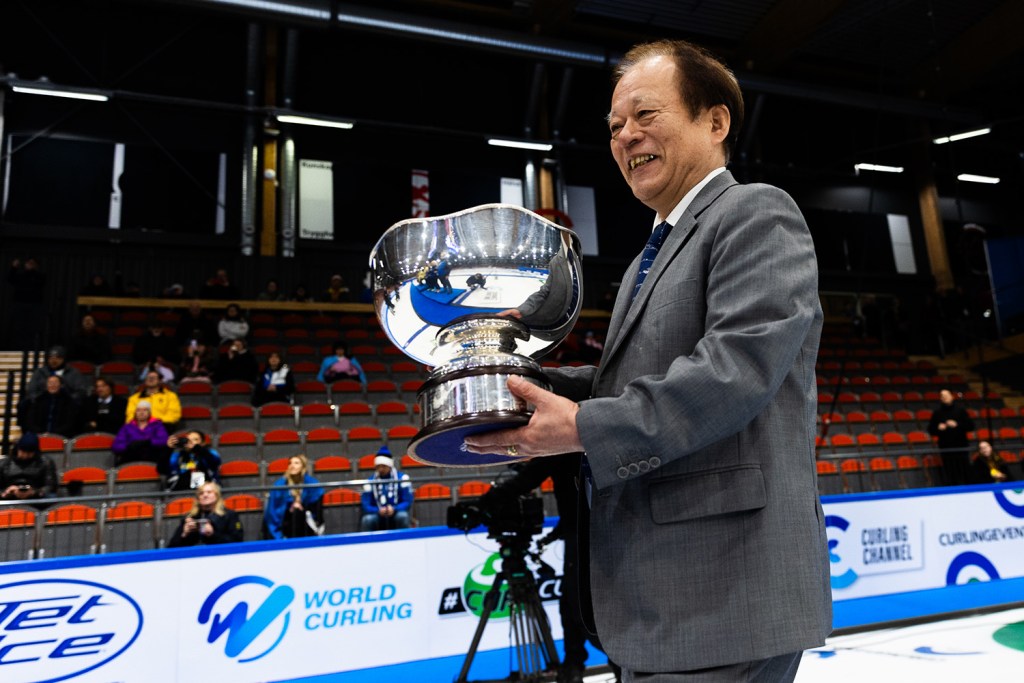
Toyo — as he is universally known — was first elected to the World Curling Board in April 2012.
As part of the World Curling Board restructure in 2014, Toyo was elected as Director for an initial one-year term and has been re-elected more than once since then.
But, just like Graham and Hugh, he came to the organisation with a significant background and experience, in business, curling and sport more generally. He says, “I was working for a construction company, so I’d had some management experience. I was a Board member of the Japan Curling Association and from there I was a member of our National Japan Olympic Committee”.
He also held a prominent post as curling made its modern-day return to the Olympic fold in 1998 at the Nagano Olympic Winter Games, “I was the team leader of the 1998 Nagano Olympic team. After that, I became Vice-President of the Japanese Curling Association and then President for a couple of years.”
And showing his involvement went beyond the glamour of the Olympic Games, he adds, “I was the instructor for the Japan Coaching programme. In the last 25 years, three of us have been responsible for creating 1,000 curling instructors — I don’t know how many are still involved!”
Speaking about his motivation in joining the Board, he explains, “When I joined, I wanted to give a different perspective to the Board. Most people are from Europe and North America, so I wanted to listen, and I wanted to keep my perspective. Coming from Japan, I wanted to represent the Asia zone.” He adds, “Also, I wanted to be involved in work where I could use my scientific and technical expertise, along with my experience in curling.”
That expertise involved Toyo in specific areas of the Board’s work, “I became Chair of the Facilities and the Technical Commission. I’ve been involved in the Facilities working group and assisting in the sustainable venue solutions work. I’m now a member of the Finance Commission.”
Toyo also acknowledges the support that he’s had, and the team spirit the Board has enjoyed, “Other Board members encouraged me and there is a very good atmosphere. We were all working very hard, and I was very happy.”
Toyo explains further, “we have been working on two big developments — to provide the best curling ice, and also, to assist in the development of dedicated curling facilities. We’ve produced planning, fund-raising, and business model documents to help in these areas.”
Asked to reflect on what he sees as the main points of progress in his time, Toyo is clear, “The most important progress has been introducing more MAs, especially in the Asia and America zones. But while we’ve been able to create a sense of a big curling family, we still need more engagement with different stakeholders. The issue is that it takes so much time and we’re slow to adopt new ideas.”
And while Toyo believes the need for these new ideas, he also cautions, “we need to find a balance between change and maintenance.”
He adds, “We’re too dependent on money from the IOC, so we need more ways to increase revenues. But we have to keep up with the IOC and I’d like to assist in that.”
Looking forward he says, “The Board members are becoming more non-operational, but I’m a hands-on type, so I have some conflict — but good conflict. It’s a good challenge for the future.”
Apart from his World Curling Board work, Toyo has been giving back to sport on a different level too, as he explains, “I’ve been a doping control officer for the last 18 years, but you have to leave Japan’s agency at a certain age, so, more recently, I have been working in International Doping Test Management based in Stockholm and have been working for them. I also assist young researchers in writing reports and that kind of thing.”
With his enforced retirement from the Board looming, Toyo reveals another aspect that may well keep him around World Curling events in the future, “I like travelling and water-colour painting. When I have more time, I’ll come to World Curling events with a sketch book.” No doubt, he’ll be more than welcome.
Graham Prouse — Thanks/Merci, Graham!

Graham Prouse, from Canada, was first elected to the World Curling Board in April 2010.
In September 2014, as part of the World Curling Board restructure, Graham was elected as Vice-President (Americas) for an initial three-year term. Before that, Graham had been on the Canadian Curling Association board (from 2005) and acted as their Board Vice-Chair from 2008–2009, and Board Chair from 2009–2010.
Explaining how he managed to devote so much time to curling administration, he explains, “I own an auto-parts and industrial supply business in Fort Nelson, BC and have for 37 years. That gave me the opportunity to first of all play competitively because I had the flexibility to be able to do that, and coach too. I played at lots of events on the World Tour for 15 years.”
He also explained the switch to sports administration, saying, “I ended up in administration by accident. We ran a couple of large cashspiels, then we won the right to host the Alberta Provincial Champs and they had secured a new sponsor for the event. I was asked to go to Edmonton to arrange for the sponsorship and after that meeting I was told there was a vacancy on the Alberta Provincial Board, and I was filling it!” He recalled wryly, “I was voluntold!”
And Graham’s involvement grew from there, “I was getting quite involved with the regional Association (PEACE), and then I ended up representing Alberta at national meetings. I then thought I was done, but I was encouraged to run for the Canada Board, and then, after five years, this opportunity [World Curling Board] came up.”
Graham also recalled his first impressions of when he joined the World Board, “I came onto the Board from Curling Canada — the largest and most mature member — and I thought the World Curling Board had the maturity of a provincial-level organisation.” He recalls clearly what he thought was one of the priorities that needed to be addressed. He says, “I can recall when I started there was a significant cashflow challenge – I’m proud that we established a reserve and built it to many millions of dollars.” He adds, “I was surprised that the international federation was less sophisticated, but that’s changed.”
“We’ve been growing the federation’s capacity — broadcasting, development. The organisation in my view is full of really good people — passionate but excited to see the organisation grow. We’re a sophisticated business now.”
Graham also recalls some of the areas that he has been involved in over the years, “Working with the Competition and Rules Commission was interesting. Also, the Maximising the Value project.”
Graham chaired the Governance Commission from 2010 to 2014, leading the organisation through a review and rewrite of the World Curling Constitution and Bylaws. Most recently, he served as the board lead for media and broadcast with a mission to ensure growth and brand recognition to a worldwide audience.
In 2015 and 2016, a major problem emerged when new methods and materials were brought in that threatened the integrity of one of the key elements of the game — sweeping. Graham was at the heart of this challenge, and he recalls, “If I was asked to point to one thing that was the most rewarding part of my time with World Curling, and probably the thing I’m most proud of, is, along with Hugh [Millikin], leading the ‘broomgate’ process.”
Graham and Hugh became Co-Chairs of the World Curling Sweeping Summit which, thanks largely to the goodwill of all those involved — especially the elite athletes — produced mutually-agreed definitions and rules that now maintain the standards to be applied to sweeping and brush-use.
Graham recalls that time saying, For a year that was my full-time job. I did my real job in evenings and weekends. It was quite incredible.” Since then, not surprisingly, Graham has taken the board lead on equipment specification and approvals.
Looking forward, Graham has some clear advice, “The biggest thing in the future is to treat our operation more like a business than we currently do, we need to self-generate revenue. We are an Olympic sport, we have elite-level athletes who are recognisable around the world, and with that comes opportunity. We need to seize that.”
And as for his own future, he says, “I’m going to do some non-curling travel and I’m sure I’ll find myself back involved at the club level. It would be really interesting if the federation saw fit to ask me to do some special projects — I’d be happy to do that.”
Hugh Millikin — G’Day and No Worries, Hugh!

Hugh Millikin, from Australia, was first elected to the World Curling Board in September 2014.
As part of the World Curling Board restructure, Hugh took up the role of Vice-President (Pacific-Asia) for an initial two-year term.
In September 2016, Hugh was re-elected, unopposed, to the role of Vice-President (Pacific-Asia) for another four-year term. Then, in 2020, he was re-elected, unopposed, to the role of Vice-President for another four-year term.
Among other contributions, Hugh is the chair and board liaison of the Competitions and Rules Commission, which ensures all competitions and rules are fit for purpose.
Hugh was born in Canada and curling has always been Hugh’s family, as he explains, “I grew up in a family of curlers — in Ottawa — my mother used to take us to the curling rink. I’ve always been involved in team sports. Curling has all the advantages of working together as a team.”
Hugh first went to Australia in 1988. He recalls, “I originally planned to be in Australia for a couple of months. At first, I thought I’d be a mechanic. I quit that and ended up being a computer programmer. When I went to Australia, we got things going there.”
In 1992, curling was given the status of a demonstration sport at the Albertville Olympic Winter Games. Hugh’s team of the time qualified Australia for this event and, because of that, as Hugh explains, “the government made me a citizen!”
From 2013 to 2014, prior to his appointment on the World Curling Board, Hugh, now established as a resident of Sydney, was the President of the New South Wales Curling Federation. Hugh explains, “when my playing was coming to an end, I became State President in Australia, and then national President, and my next thought was to be a World Curling Board member.”
Looking back, Hugh reckons he has brought a ‘critical friend’ approach to his role. He says, “I’ve always had an entrepreneurial background — so I’m always asking questions.” He adds, “Rules and Competitions was my first main focus. I was also on finance. As an entrepreneurial guy, I also worked on the commercialisation strategy.”
Hugh continues, “I discovered early that the organisation didn’t move as quickly as I wanted it to. There were always historical reasons for why we weren’t doing something. It’s a frustration of mine that when we see an opportunity, why don’t we just say ‘yes’? The world is changing, broadcast revenue is changing, the money we’re getting from the IOC is changing, so we need to find new ways.”
Another area of focus for Hugh was the new discipline of Mixed Doubles curling, “When I looked at Mixed Doubles, we knew the format had to change to stand a chance of getting into — and staying in — the Olympics.”
Times have changed now, of course, with Wheelchair Mixed Doubles poised for its Paralympic debut.
Hugh has also been involved in trying to make World Curling events more spectator friendly, “From my experience in Canada, I knew that there were always lots of fans in the stands, yet when we go to other places, there’s nobody, so we have to find a way of changing that. If you look at the demographic of our fans, it’s fairly old — we need to get youth involved. Yes, we’re a sport but we’re also an entertainment property. Thinking about it in that sense will drive all the other issues.”
Like his Summit Co-Chair Graham [Prouse], Hugh recalls the challenges of the sweeping crisis of 2015–2016. “We were very naive. When somebody created a product, the curling world was in crisis, absolute crisis. That would have been difficult if we did not have the goodwill of the athletes.” He added, “the elite athletes did not want this to continue, so it was up to us in World Curling to deal with this in a scientific way and to come up with a solution that was acceptable to everybody. It was several months of my life — almost full-time — but the net result was, along with the athletes, we came up with the solution.”
Looking forward, Hugh is undecided about his own way forward. He says, “I’m not sure what I’m going to do now. I retired from my business in 2011, and being on the Board has been almost a full-time job since then. Perhaps I need to go back to my entrepreneurial roots and buy a business, or something.”
Toyo, Graham and Hugh are stalwarts of our sport and a tough trio to follow. Everyone at World Curling offers them our sincere and heartfelt thanks for everything they’ve contributed to the curling community and wishes them all every success in their next steps.
Engage with World Curling on Twitter/X, Instagram, TikTok, Facebook and Weibo and by searching the hashtag #curling