

13 May 2024
Modern versus traditional? Technology in curling
Cameras, stopwatches, tablets and laser measures in contrast with rulers, mechanical measuring devices and umpire’s eyesight decisions—is curling technically advanced or is there space for improvement? A key question for players, umpires and members of World Curling staff.
Umpire’s eye on the hog
“The eye on the hog” is a mechanism that is supposed to check whether players release the stone before the hog line. Violation of that rule means a red light on the handle and an automatic removal of the stone from play. It was used at major events such as European and world championships.
For a few years, however, this tool has not been used due to frequent failures. The last time curling fans could see the electronic handles was at the Scotties – the Canadian women’s national championship – this season. They were, however, removed after a few sessions because they signalled red even when the stone was released before the hog line.
World Curling is now in the process of buying new handles with new technology.
“This project has suffered some delay due to COVID and the war in Ukraine. We are hopeful that the ‘new handles’ will be available for the start of next season again. Those handles were for sure a great step forward when they were introduced and we want to bring them back,” says Eeva Roethlisberger, World Curling Head of Competitions.
This piece of technology is also important for athletes and umpires. “Hog line violations are one of the most difficult calls for me. You have to watch a hand in motion, from a distance, normally one sheet away, and often the athlete’s hand remains next to the stone after release. I can only make a hog line call when 100% sure of violation, so those handles will help a lot,” adds Anton Porotikov, a World Curling competition official.
Micrometre accuracy
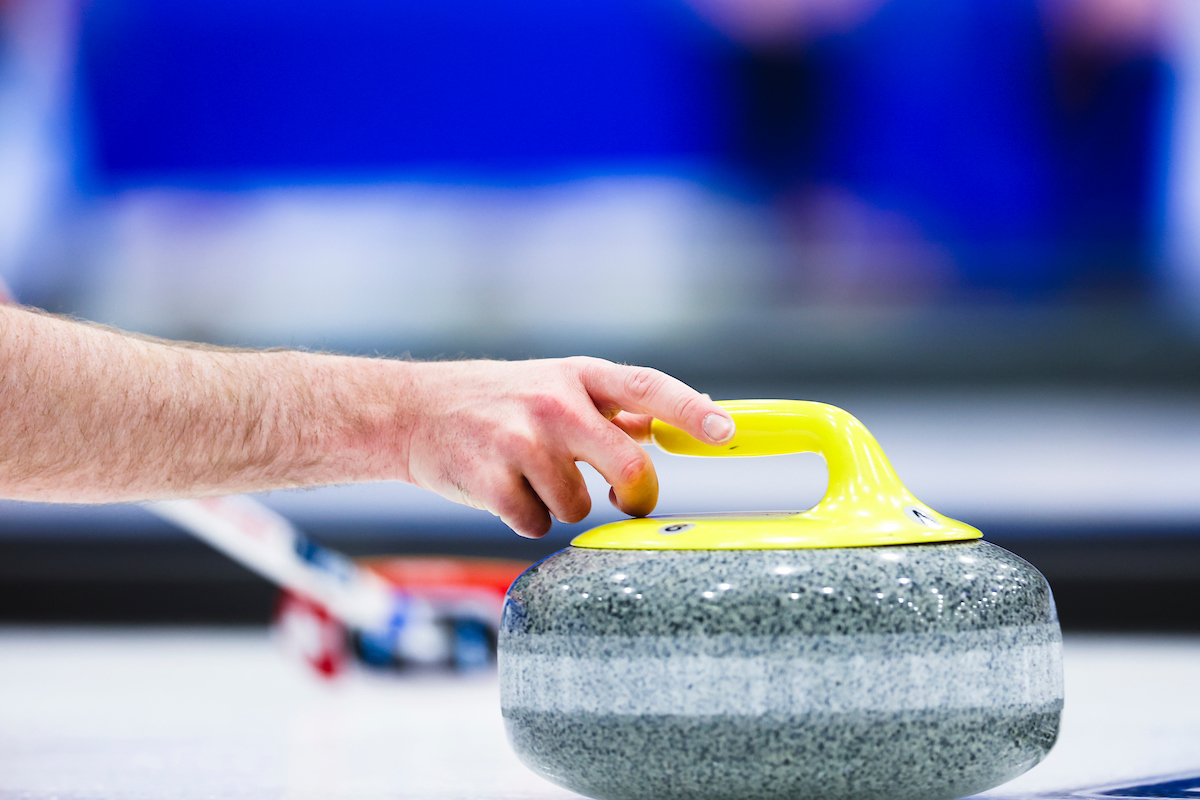
For measuring which stone is closer to the button, mechanical devices are still being used. They can detect even a micrometre difference.
“Stone-measuring has not improved dramatically. The ‘old-fashioned’ measures are still the most accurate in comparing two stones. Digital laser measures are great, but they are still too expensive if you want perfect accuracy on a small distance,” says Roethlisberger.
“For officiating, accuracy is the key, and often ugly manual tools that are used seem more accurate than what affordable technology can provide,” adds Porotikov.

Broadcast standards
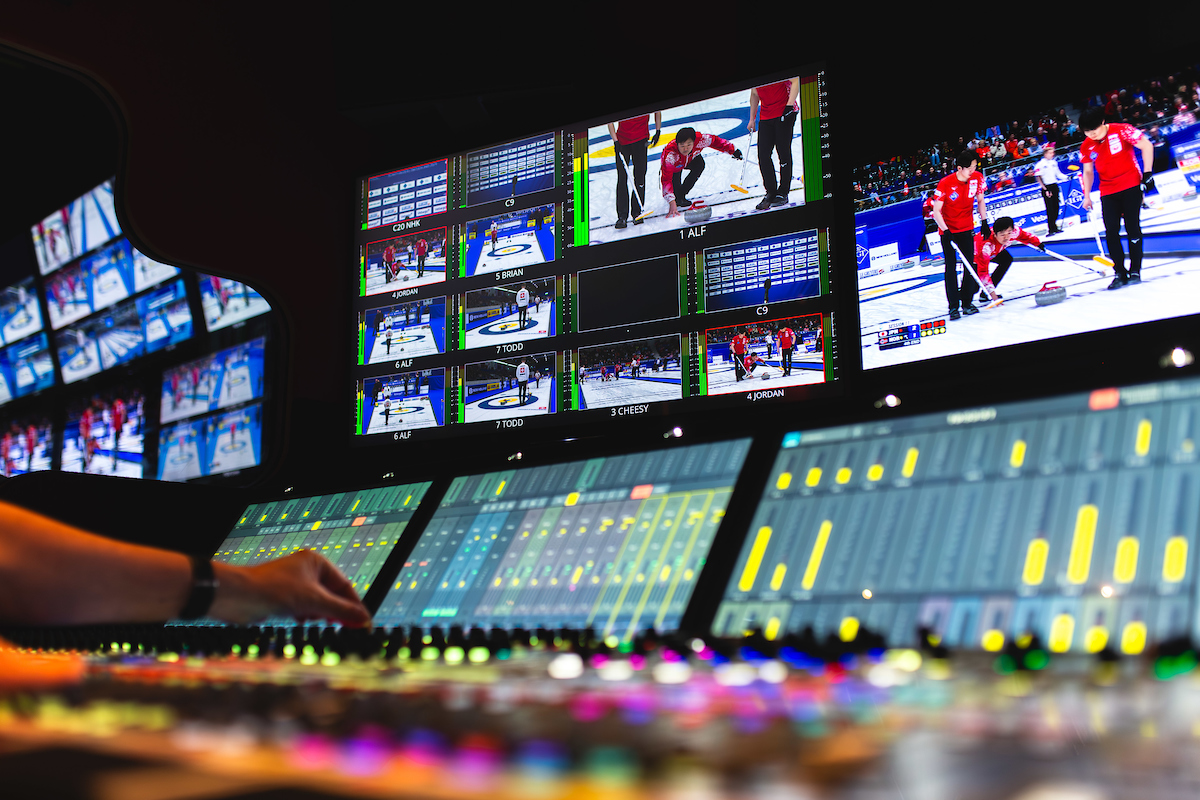
Cameras and microphones have been a part of curling for many years. This season’s world championships have brought cameras to all sheets so that fans could watch the livestream of their favourite team’s game even when their sheet was not the one broadcast with commentary.
For years now, broadcasters have been showing statistical information about the players’ performance. The fans can, therefore, see the cumulative percentages over the tournament and the numbers of each game as well.
No “on-body” measuring devices are used in curling, not even for team purposes, as in other sports such as football and rugby.
“World Curling has looked at this—and so did the broadcasters. To my knowledge, it was not considered for statistical purposes, but it was felt it could be interesting for broadcast. But this was then never implemented…It could be that this is also very personal and not something which should be shared around the world,” says Roethlisberger.
As an athlete, Estonia’s Harri Lill doesn’t mind wearing additional technology while playing. “I would be happy to wear any kind of electronic device during the game which would help to make our sport more entertaining from the spectator’s point of view.”
Athletes and training technology
What the spectators can see is just a small amount of technology that is used in curling. Athletes, their coaches and assistants use various devices to make training more effective and to test new technical skills and improvements.
One of the devices is called a “smart broom” which tests the athlete’s pressure and frequency of movement whilst sweeping. For rock throwing, many teams use speed traps and lasers.
“Since the beginning of the season, we have also been able to use a “rock cannon” here in Tallinn which enables you to throw a rock with different amounts of rotations and speed. In combination, all these tools are effective for research, as well as for training,” says Lill, who is an elite curler and a coach as well.
Technology is nowadays involved in all sports and curling is not an exception. Especially for training purposes, there has been a lot of progress towards technological improvements to make the time spent on the ice more effective with measurable results.
The game itself, however, has kept its combination of modern and traditional, using the most useful tools possible from both worlds.
Written by feature writer, Anna Kubeskova
Engage with World Curling on TikTok, Twitter/X, Instagram, Facebook, and Weibo and by searching the hashtag #curling